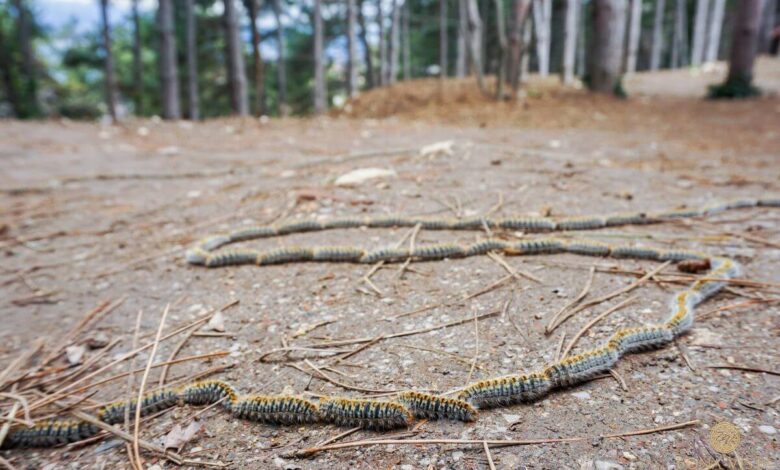
This winter in Madrid, the threat to residents and their pets has sharply increased due to an invasion of processionary caterpillars. These insects can cause severe allergies and irritation, and contact with them can have serious consequences for dogs. In response, city services launched a large-scale operation to remove nests, aiming to reduce the risk for everyone walking in the capital’s green areas.
Large-scale cleanup
According to El confidencial, Madrid city council specialists have eliminated more than 53,500 processionary caterpillar nests in recent months. The operation covered all 21 city districts, including major parks and forested areas. Special attention was given to places frequented by children and pets: playgrounds, recreational zones, and areas near schools. These locations are where accidental encounters with the pest are most likely.
The caterpillars move across the ground in long chains, often attracting the attention of passersby. However, their bodies are covered with countless microscopic hairs that cause irritation to the skin and mucous membranes. Dogs, who may try to sniff or bite the caterpillars, are at particular risk of severe reactions. That’s why city crews not only remove nests, but also inform residents about the dangers.
Comprehensive response
The fight against this pest goes beyond just removing nests. Throughout the year, the city council employs various methods to contain the population. In summer, pheromone traps are installed in parks to prevent males from reproducing. In autumn, trees are treated with special agents injected directly into the trunks—this way, the substance enters the sap and acts on the caterpillars when they begin feeding on the needles.
In January and February, it’s time for manual nest removal using long poles and lifts. Additionally, special rings are attached to tree trunks to prevent caterpillars from descending to the ground and forming dangerous ‘processions.’ This season, more than 5,300 of these devices have been installed. All these measures aim to minimize risks for people and animals.
The impact of climate and new challenges
The number of nests varies from year to year, influenced by weather conditions: mild winters and stable springs help more caterpillars survive, while a decline in natural predators further worsens the situation. Nonetheless, regular campaigns help keep the problem under control and prevent massive damage to trees.
City authorities remind residents: if you find caterpillars or their nests in parks and green areas, do not touch them yourself. It’s best to immediately report the finding by calling 010, so that specialists can respond promptly. As noted by El confidencial, such reports enable quicker responses and help prevent further contact cases.
Where the risk is highest
The largest-scale operations took place in areas such as Casa de Campo, Dehesa de la Villa, and Finca de Tres Cantos. District parks were also treated — Pinar de la Elipa, Pinar de San José, and Ventilla Park. These areas have many pines and cedars, which often serve as shelters for caterpillars. Importantly, the measures covered not only major green spaces but also smaller ones throughout the city.
In recent years, Spain has increasingly implemented decisions that directly affect urban life. For example, authorities in Catalonia recently introduced new restrictions on property purchases by investors, sparking discussions among residents and experts. You can learn more about how these changes might impact the real estate market in the article about the new regulations for apartment buyers in Catalonia.
In recent years, various regions of Spain have reported surges in processionary caterpillar activity, especially after mild winters. In Valencia and Andalusia, large-scale campaigns have been carried out to remove nests and treat trees. In some cases, local authorities temporarily restricted access to certain parks to protect visitors. Such measures have already proven effective: the number of medical visits due to contact with caterpillars has noticeably decreased. Experts expect that tackling this pest will remain a priority for city services in the future, especially with a changing climate.