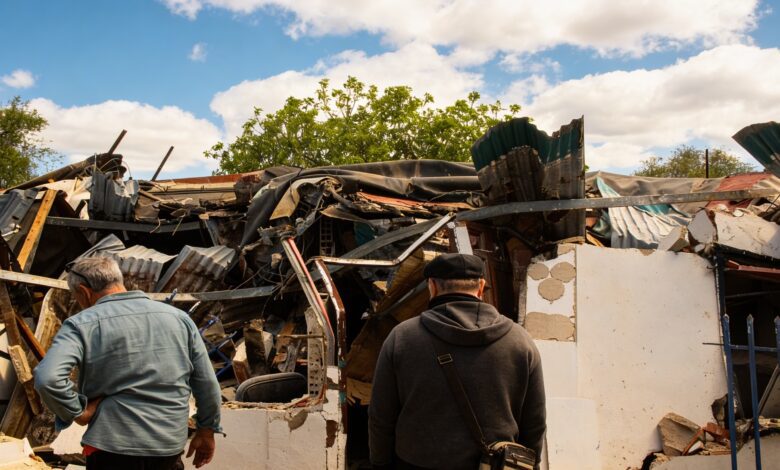
The demolition of residential buildings in Cañada Real has once again sparked a heated debate about residents’ rights and the actions of Madrid’s municipal authorities. In a recent operation, four houses were torn down, leaving one family with children homeless and without any alternative offered. This incident highlights the urgent challenge of ensuring basic living conditions for vulnerable groups in Spain’s capital.
According to El Pais, the demolitions took place without prior notice, which angered local residents. Representatives of the movement ‘Cañada se queda’ claim that two of the demolished buildings were occupied, and one housed a young couple. Authorities, for their part, stated that all the structures were vacant and had been abandoned by their previous occupants after relocation. However, residents insist that families were still living in these homes, with no alternatives provided to them.
Operation and aftermath
Activists flagged procedural violations during the demolition. They say municipal officials did not present official eviction or demolition documents and did not engage in dialogue with residents. Materials potentially hazardous to health, such as uralite, were used in the dismantling process without proper safety measures for neighboring homes. During demolition, a family did not have time to remove all their belongings, causing additional stress and risk.
After the work was completed, some nearby homes were left without water supply, further worsening already difficult living conditions. The area has experienced electricity outages for several years, and now there are added problems with access to water. Construction debris left after the demolition was not removed, creating obstacles for movement and increasing the risk of fires, especially given the presence of children in the area.
Response and Legal Aspects
Criticism of the municipality increased when details emerged about the role of those responsible for organizing the demolition. According to El Pais, the operation was led by an official previously convicted of abuse of power during similar actions in 2022. Authorities have not commented on his possible involvement in the latest incident. Residents and human rights organizations emphasize that the administration’s actions violate Law 2/2011, which prohibits demolishing residential homes without providing alternative housing and following all legal procedures.
Recent court decisions have also raised doubts about the legality of certain evictions in Cañada Real. Regional courts have repeatedly pointed out violations of procedures, and in 2025, the Council of Europe concluded that Spain is violating residents’ rights by leaving them without electricity and access to basic services. This situation has persisted since 2020, when mass power outages began in the area.
Urban Development and Social Tension
The ongoing conflict is closely linked to large-scale development in southeast Madrid. New residential neighborhoods like El Cañaveral, Los Cerros, and Los Berrocales are gradually encircling Cañada Real, making it a strategic area for city authorities. This increases pressure on longtime residents, many of whom face legal uncertainty and social vulnerability.
Families who agree to relocation often find that new housing is far from their familiar environment, making it difficult to maintain social ties and find work. According to russpain.com, such cases are becoming increasingly common amid Madrid’s rapid urbanization.
Context and similar cases
In recent years, Spain has repeatedly faced conflicts over the demolition of informal settlements and the eviction of families without providing alternative housing. In 2024, a similar situation in Barcelona sparked mass protests after part of La Mina was demolished. In Valencia in 2023, authorities also faced criticism for demolishing homes in the El Cabanyal area without sufficient guarantees for residents. These events highlight that ensuring housing rights and following proper procedures during urban development remains one of the most pressing issues for Spain’s major cities.