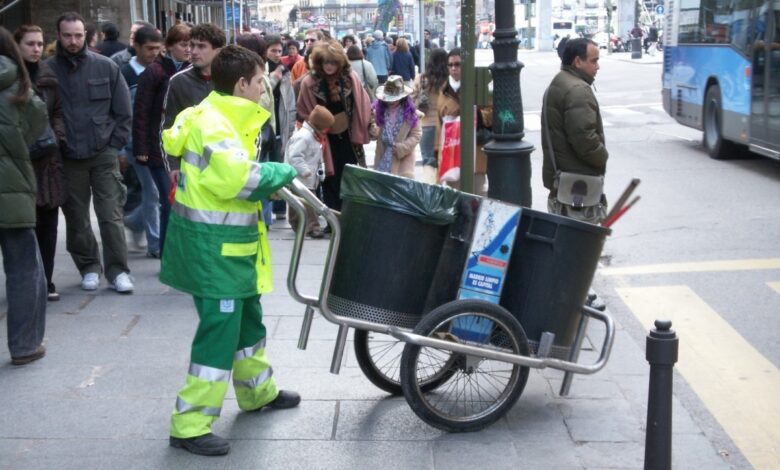
Starting in September 2025, Madrid authorities have begun collecting a new and widely debated waste disposal tax, better known as the ‘garbage tax.’ This measure, officially called the Tasa de Gestión de Residuos (TGR), is mandatory and has been introduced in accordance with national law. The main purpose of the new fee is to fully cover the costs of collecting and processing municipal waste.
In its first year, the tax will affect more than 1.7 million properties in the capital. The city council has already started sending out individual notifications by email and SMS, giving owners a two-month window to make their payment. In 2025, the payment will be a one-off, but starting from 2026, residents will be able to set up automatic account deductions and split the amount into installments.
The payment deadlines for this year will depend directly on the date of notification. If you receive the notification in the first half of the month (from the 1st to the 15th), payment must be made by the 20th of the following month. If the notification arrives in the second half (from the 16th to the end of the month), the deadline shifts to the 5th of the second month after receipt. Notifications started being sent on September 8 and this process will continue for about two months. Starting next year, the tax will be included in the general registry, which will be published annually for 15 days on the city hall’s official website.
According to preliminary calculations by the city council, the average annual tax will be €141 for residential properties and €310 for commercial properties. In 2025, total collections for the city budget are expected to reach approximately €296 million. However, the final amount for each individual household may vary significantly.
The tax calculation formula consists of two parts. The main, base rate makes up 81% of the total and depends primarily on the cadastral value of the property. The remaining 19% is a waste generation fee, determined by the volume of garbage and recycling levels in each of Madrid’s 131 districts. This approach has led to significant disparities in payments across different parts of the city. For example, residents of the affluent El-Plantío district will pay an average of €574, El Viso—€457, and Recoletos—€430. Meanwhile, in San Cristóbal, the average bill will be just €45, and in Pradolongo and Sofío—€59 each.
At the same time, city authorities have implemented a system of benefits and exemptions for vulnerable groups. Full exemption from the tax is available to beneficiaries of the minimum living income (Ingreso Mínimo Vital) or the minimum income for social integration (Renta Mínima de Inserción). To qualify, they must submit the relevant application annually by March 1. Large families may receive a discount ranging from 10% to 90% depending on their category and the property’s cadastral value. This benefit is applied automatically if the property owner is registered as a large family. Garages and storage rooms connected to homes, as well as vacant plots and dilapidated buildings, are also exempt from the tax. Owners of empty apartments and unused commercial premises pay only the base rate, but must submit a special declaration to do so.
The new measure has not escaped criticism. The public and experts point to the lack of social criteria in the calculation process, which could negatively impact low-income households living in areas with high cadastral property values. Another concern is that there is no special surcharge for tourist apartments, even though they generate significantly more waste. Additionally, many consider the calculation model itself to be unfair: 81% of the fee depends on the value of the property, rather than the number of people living in it. As a result, a family of five in a modest apartment will pay less than a single pensioner in a more upscale area.
RUSSPAIN reference. Ayuntamiento de Madrid, or the Madrid City Council, is the main municipal governing body of Spain’s capital. It is responsible for a wide range of urban issues, including urban planning, transportation, public safety, social services, culture, and, of course, the management of municipal services such as waste collection and disposal. The council is headed by the mayor (alcalde), who is elected by the council members. The structure of the city hall includes various departments and agencies that implement urban policy and provide services to more than three million residents of Madrid.