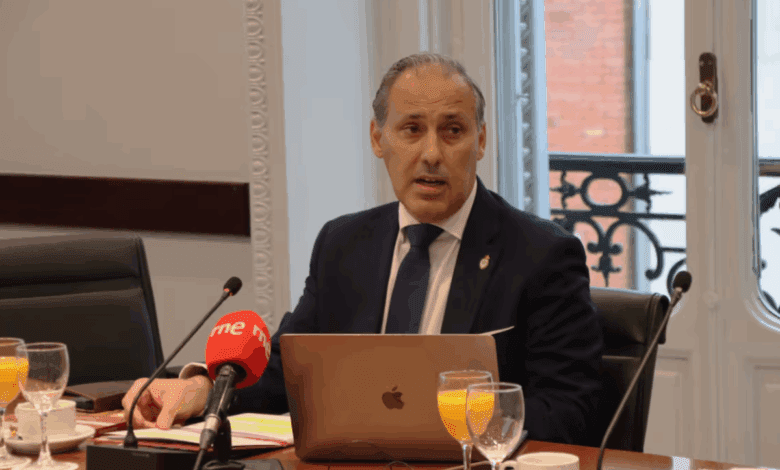
A conflict is escalating in Madrid, now reaching far beyond the legal community itself. Two influential associations — the Association of Democratic Lawyers for Europe (Adade) and Defiéndete en Derecho — have sharply criticized the leadership of the city’s bar association (ICAM). The controversy erupted after the dean, Eugenio Ribón, initiated legal proceedings against former Attorney General Álvaro García Ortiz. Now, lawyers are demanding a public explanation and an extraordinary assembly, seeking answers as to why the bar association has been drawn into political games.
In a letter sent to ICAM, representatives from both associations accused the bar of losing all neutrality and becoming a tool in political struggles. According to them, the actions of ICAM leadership serve the interests of certain political forces rather than protecting the independence of the profession. The harshest criticism was directed at the dean, who, they claim, used the institution to exert pressure on the former attorney general at the center of a high-profile legal case.
Political undertones
At the center of the scandal is Álvaro García Ortiz, who was recently sanctioned by the Supreme Court with a two-year suspension from office and a large fine for disclosing confidential information. The Madrid Bar Association acted as the prosecutor in this case, demanding a four-year prison term for the former prosecutor. However, according to representatives from Adade and Defiéndete en Derecho, the ICAM initiative was driven more by political motives than legal ones — under pressure from influential political circles, including the partner of Madrid’s regional president Isabel Díaz Ayuso and her advisor Miguel Ángel Rodríguez.
Lawyers insist that key details were deliberately omitted from the charges against García Ortiz, including the smear campaign against the prosecutor’s office, which was orchestrated by people close to Ayuso. According to former Adade head José Mariano Benítez de Lugo, the bar association filed a ‘biased’ complaint, ignoring clear evidence of pressure on the prosecution. These actions, the associations warn, have triggered a serious alarm across Spain’s legal community.
Internal crisis
The situation worsened after the end of 2023, when news broke about a political agreement between the Socialists and the Catalan party Junts that allowed Pedro Sánchez to return as prime minister. According to critics, the ICAM leadership then issued a statement filled with misleading information about the political pact and subsequently organized a series of events featuring speakers who were openly sympathetic to the opposition. Former Adade president Javier Ledesma considers all this an example of unprecedented political pressure within the bar association.
Roberto Granizo, the current head of Adade, notes that the bar association not only spread distorted information but also sent delegations to Europe to ‘raise the alarm’ among European officials. The situation came to a head with a lawsuit against García Ortiz, which, in the view of the associations, has finally undermined ICAM’s reputation as an independent institution.
Leadership demands
In response, Adade and Defiéndete en Derecho are demanding that Dean Ribón immediately convene an extraordinary meeting of the bar’s members. The agenda includes a discussion of the management’s actions, including the possibility of a vote of no confidence or, on the contrary, support for their course. The lawyers insist that only open dialogue and transparency will help restore trust in an organization that has always been considered unifying and impartial.
Particular outrage has been sparked by the fact that, according to critics, the board ignored the smear campaign against the prosecution and failed to account for the pressure on García Ortiz. Former Adade president Ledesma emphasizes that ICAM has always been a model of integration and neutrality, but now these principles are under threat.
Implications for the legal profession
The trial against the former prosecutor ended with a tough verdict: two years suspension, a fine, and compensation to businessman González Amador for disclosing secrets. Meanwhile, state lawyers representing García Ortiz have already announced their intention to appeal the decision in the Constitutional Court and seek to suspend the execution of the sentence.
Growing concern is spreading through Madrid’s legal community: if the bar association ultimately loses its independence, this could set a dangerous precedent nationwide. Political interference in the work of professional institutions is an alarming sign that should not go unnoticed. Personally, I believe such cases erode trust in the profession and undermine the foundations of the rule of law. But, as practice shows, in Spain such conflicts rarely end quickly or predictably.