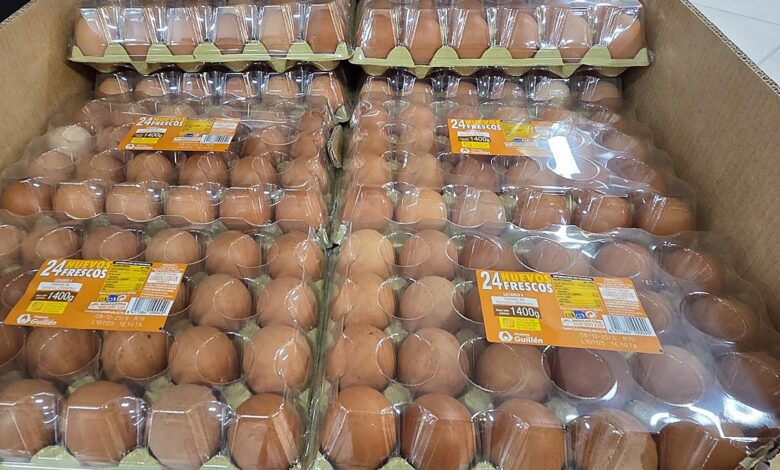
Spain’s largest supermarket chain, Mercadona, has temporarily changed its egg selection due to an outbreak of avian flu affecting not only Spain but other European countries as well. As a result of newly imposed sanitary restrictions designed to protect poultry, some hens have been moved to indoor housing. This has directly impacted the supply of eggs from cage-free hens.
Normally, Mercadona shelves are stocked with eggs laid by hens raised in spacious barns or outdoor areas. Until recently, these eggs accounted for about 65% of all fresh eggs sold in the chain’s stores. However, due to new veterinary measures, this figure has temporarily decreased. Company representatives emphasize that the situation is strictly temporary, and the usual assortment will return as soon as the epidemiological situation improves.
Investments and changes
For several years, Mercadona has been systematically transitioning its suppliers to produce only eggs from cage-free hens. To achieve this, the chain’s partners have invested more than 200 million euros in modernizing farms and production processes. Over the next few years, this amount may double, as the ultimate goal is to completely eliminate caged production.
As part of this program, new modern farms are opening across the country. For example, in Utiel (Valencia), Gáldar (Gran Canaria), Bullas (Murcia), and Abárzuza (Navarra), facilities have already been built or modernized where hens are raised exclusively in free-range conditions. Some companies have completely abandoned combined systems and switched to 100% cage-free production.
Standards and oversight
The company pays special attention not only to product quality, but also to animal welfare. All suppliers of fresh meat, eggs, and milk are required to have international animal welfare certifications. This means that hens and other animals must receive a complete diet, have constant access to clean water, be kept in comfortable conditions with shelter from heat or cold, and breathe fresh air.
These requirements apply throughout the entire supply chain. Mercadona regularly checks compliance with its standards to guarantee consumers not only quality but also ethical production. The company emphasizes that even with temporary restrictions caused by avian flu, all basic animal welfare requirements remain unchanged.
Market impact
The temporary reduction in the share of free-range eggs has been noticed not only by regular Mercadona customers but also by other market participants. Some farmers have been forced to temporarily change the conditions in which their birds are kept to prevent the spread of the virus. This decision has been supported by both veterinary services and the producers themselves, who recognize the importance of protecting their flocks.
It is still unknown how long these restrictions will last. However, Mercadona representatives assure customers that as soon as the sanitary situation stabilizes, the company will return its usual selection of eggs to the shelves. Suppliers are already preparing to restore previous supply levels, and shoppers can expect their familiar choices to be available again in the near future.