The scandal surrounding the case of fraud with oil products has once again captured the attention of Spaniards. At stake are not only the reputations of prominent entrepreneurs, but also questions about the transparency of political processes. At the heart of the story is a mysterious cash delivery of a large sum to the headquarters of one of the country’s leading parties. This episode could influence perceptions of integrity in business and politics, as well as trust in state institutions.
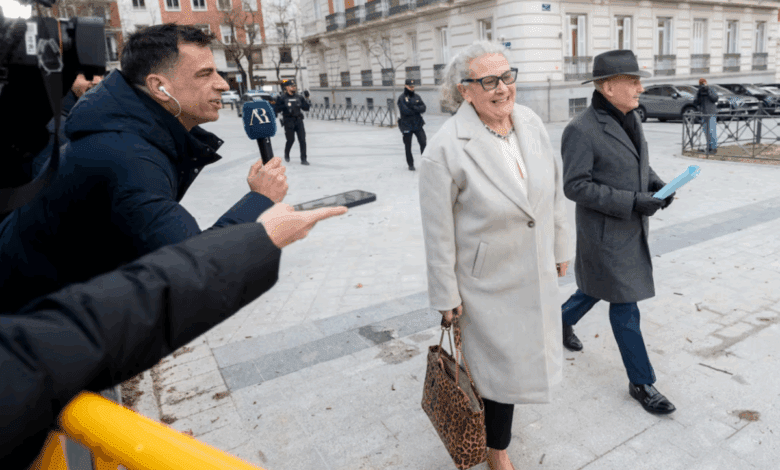
Carmen Pano, a businesswoman, has found herself at the center of a high-profile investigation. During questioning at the National Court, she once again confirmed her version of events: according to her, she personally delivered €90,000 in cash to the PSOE headquarters on Calle Ferraz in Madrid. The reason, she said, was a direct order from Víctor de Aldama, whom investigators consider a key figure in the Koldo case. This testimony completely contradicts Aldama’s position, who the day before categorically denied any involvement in the delivery of the money and stated he had nothing to do with these funds.
Two versions
The testimonies of Pano and Aldama not only differ—they directly contradict each other. Pano described in detail how the delivery took place: according to her, the money was received in two installments, both linked to entrepreneur Rivas. In one case, she withdrew the funds herself; in the other, she obtained them through an intermediary. Both times, Pano claims, she brought the money to the PSOE headquarters, acting solely on Aldama’s orders.
Aldama, for his part, completely denies any involvement in these events. He claims that his business dealings with Rivas and the Pano family were limited solely to real estate transactions. According to him, all actions related to obtaining a petroleum products license were carried out by Have Got Time, a company connected to Pano, and not by Villafuel, which was managed by Rivas. However, Pano insists that all efforts were focused specifically on Villafuel.
At the heart of the investigation
According to the Central Operational Unit of the Civil Guard (UCO), Villafuel occupies a key position in the alleged VAT fraud scheme, which could exceed 200 million euros. Investigators believe that Rivas and his partners created this company after their previous structure was exposed for similar violations.
With the launch of Villafuel, Rivas turned to Aldama, his partner in other projects, asking him to use his connections to obtain the required license. For this purpose, investigators say, Aldama brought in Koldo García, former advisor to Transport Minister José Luis Ábalos. García, in turn, reached out to senior officials in the Ministries of Industry and Ecological Transition to speed up the paperwork process.
Unexpected details
Pano’s testimony has added new details to the unfolding events. She claims that she acted solely on Aldama’s instructions, and that all actions were aimed at securing a permit for Villafuel. Her statements contradict not only Aldama’s position but also the official version previously presented by other parties in the case.
At the same time, Aldama maintains his innocence, emphasizing that he had no involvement in the transfer of funds and did not participate in organizing the scheme. His defense is based on the argument that all his contacts with Rivas and Pano concerned only real estate, not the oil business.
Unanswered questions
The investigation continues, with new details further fueling public interest in the case. Conflicting testimonies, large amounts of cash, political connections, and attempts to secure administrative permits—all of this creates an atmosphere of uncertainty and tension. Spanish society is closely following developments, anticipating further revelations and unexpected twists.