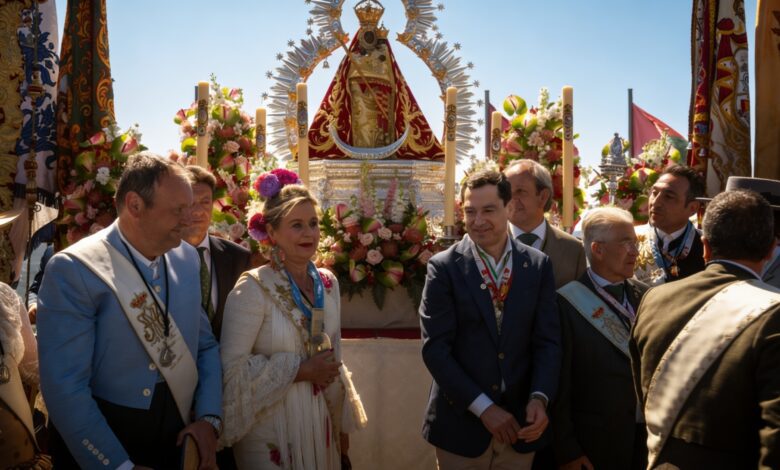
In Andalusia, the president’s election campaign is unfolding against the backdrop of the region’s largest traditional festivities. Juan Manuel Moreno Bonilla, who heads the regional government, is actively using public events for official statements and meetings with residents. This time, he attended the Virgen de la Cabeza pilgrimage in Andújar (Jaén), considered the oldest in Spain and set to celebrate its 800th anniversary next year.
During his visit, Moreno emphasized that such traditions reflect the “distinct cultural identity and popular spirit” of Andalusia. According to him, the mass participation of locals and visitors in religious and secular celebrations distinguishes the region from other autonomous communities, where, in his view, national issues are discussed differently. In an interview with Canal Sur, he stressed that in Andalusia, “popular energy and religious devotion merge in unique ways,” and added that while he respects the traditions of other regions, he considers local celebrations exceptional in both scale and spirit.
Moreno also highlighted the importance of coordinated work between different levels of government to ensure safety at events like these. This year, according to Andalusia’s 112 emergency service, over 200 incidents have been recorded at the pilgrimage since Friday, mostly involving minor medical issues. Authorities have strengthened inter-agency coordination to allow tens of thousands of pilgrims and tourists to participate safely. Moreno also pointed out that this spring has been especially green and scenic, attracting even more visitors.
During the celebration, the president not only attended the mass and procession but also spoke with members of the brotherhoods and local residents. He urged everyone who has not yet been to the pilgrimage to visit Andújar to experience the atmosphere, the gastronomy, and the “special spirituality” of the event. This is already Moreno’s third visit to this event as head of the region.
The day before, while in Almería, Moreno raised the issue of infrastructure problems. He stated that only a representative of his party as head of government could complete the construction of the AVE line between Almería and Murcia, which has been delayed. According to him, under the government of Mariano Rajoy, there was a clear plan to finish the work by 2023, but after the change in power the deadlines were postponed, and now the line is unlikely to launch before 2029. Moreno also expressed dissatisfaction with the level of central government investment in transport, energy, and water projects, particularly amid the region’s worst drought in decades, which is affecting local farmers.
The use of mass celebrations for political statements is becoming a noticeable trend in Spanish regions. Similar approaches to public activity are demonstrated by other politicians, such as Mónica Oltra, who recently held a meeting in Valencia to discuss uniting left-wing forces and housing issues — more details on this can be found in the article about Oltra’s return to public politics.