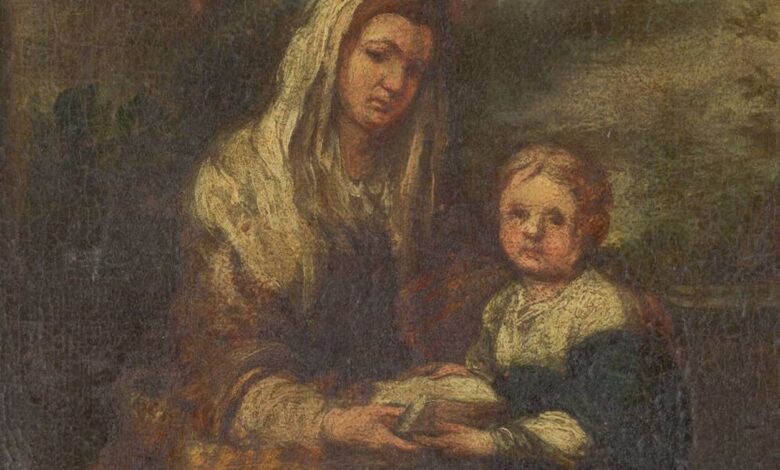
An event long awaited by generations of art historians took place in Madrid: a work by Bartolomé Esteban Murillo, missing since a bold theft at the end of the 19th century, has returned to the halls of the Prado Museum. Small in size but immense in significance, this sketch, once part of the collection of Isabel de Farnesio, is now once again on display for the public. The painting, discovered in France, is featured in a special exhibition dedicated to women who changed the course of Spanish history.
The journey of this work was filled with mysteries and chance discoveries. For more than a century, its whereabouts were the subject of rumors, while mentions in old newspapers and archives gave no clear answers. Only in 2024, thanks to a technical review at the museum in Pau, was the authenticity of the sketch confirmed and its history restored. Now, after restoration, the piece will remain at the Prado for at least ten years as the question of its permanent return to Spain is resolved.
A Long Road Home
The story of Murillo’s missing sketch began in 1897, when it was stolen from the Prado’s collection. For decades, the artist’s name would occasionally surface in articles and catalogs, but no one could say for sure where the piece was. It was only last year, during an inventory by French experts, that attention was drawn to the unusual technique and details characteristic of Murillo.
Spanish experts soon joined the investigation. After a thorough analysis of the style and materials, along with consultations with leading art historians, there was no doubt left: the discovered sketch is indeed the work of Murillo. The issue of returning the artwork came to the forefront, and following negotiations between museums and culture ministries of both countries, it was decided to temporarily transfer the piece to Madrid.
The role of Isabel de Farnesio
The return of the sketch coincided with the launch of a new museum program dedicated to the contributions of women to Spanish art. A special place in this story belongs to Isabel de Farnesio—one of the most influential patrons of the Baroque era. Thanks to her passion for collecting, dozens of Murillo’s works entered the royal collections, and her personal collection laid the foundation for future museum holdings.
Today, Murillo’s sketch holds a place of honor in the hall dedicated to Isabel de Farnesio. It is surrounded by other masterpieces from her collection, allowing visitors to appreciate the scale of her contribution to Spain’s artistic heritage. The exhibition opens on December 1 and is set to be one of the year’s most prominent cultural events.
International cooperation
The restoration of justice was made possible thanks to the joint efforts of specialists from France and Spain. Baroque painting experts, who carried out technical and stylistic analysis, played a key role, along with restorers who returned the painting to its original appearance. The negotiations involved representatives from the culture ministries of both countries, as well as staff from the Prado and Pau museums.
While formalities are still being finalized, the sketch will remain at the Prado as a temporary deposit. France is expected to make a decision regarding its permanent transfer to Spain in the coming years. For the museum, this is not only the recovery of a lost masterpiece, but also an important step toward preserving cultural heritage.
Significance for the Prado
The appearance of Murillo’s sketch in the Prado’s halls created a real sensation in the museum community. This discovery not only filled a gap in the collection, but also offered a new perspective on the role of women in art history. The exhibition dedicated to Isabella Farnese vividly illustrates how personal passions and a love for art can change the destiny of entire generations.
For museum visitors, this is a unique opportunity to see a work once thought irretrievably lost. The painting has already generated great interest among the public and experts, and its return has become a symbol of perseverance and professionalism triumphing over time and circumstance.