In 2025, the Spanish healthcare system faced a storm of criticism: 14,986 reports of alleged medical errors were filed over twelve months. This figure means that every day, more than forty cases were registered in the country where patients or their relatives believed that care was provided improperly. Complaints increased by nearly nine hundred compared to the previous year, while the number of deaths associated with such incidents reached 951.
Public discontent is growing, with many linking the situation to an evident crisis in healthcare. Patients are increasingly confronted with indifference, while doctors and nurses struggle with burnout and a shortage of resources. As a result, hospitals are becoming places where the human factor is pushed aside and the flow of patients seems endless and out of control.
System on the brink
The situation in public clinics is alarming even to the most composed citizens. Lines in departments are not getting shorter, and attempts to book a doctor’s appointment through local services often end in failure. People head straight to hospitals, skipping the primary care system, further worsening the overload. Doctors admit that many have long lost motivation, and some are completely burned out. Meanwhile, patients complain of cold attitudes and a lack of basic compassion.
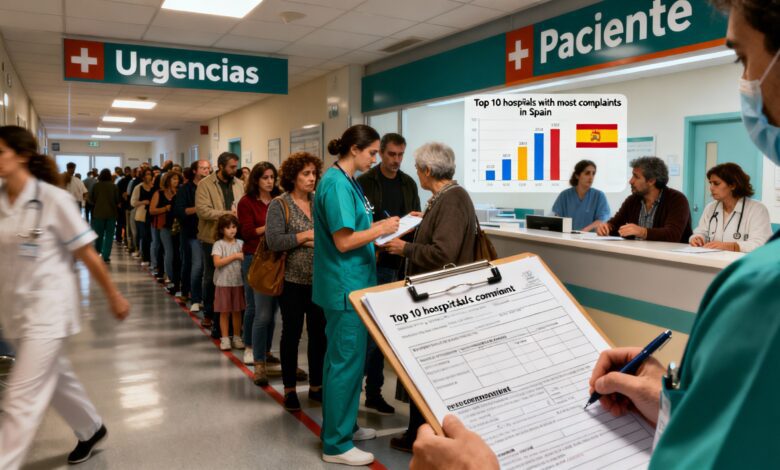
The problem is particularly acute in emergency departments. Here, complaints about bed shortages, long waiting times, and overcrowded corridors have become commonplace. In some cases, patients are forced to wait for hours or even longer to be seen. Doctors and nurses are pushed to their limits, but this is clearly not enough to provide an adequate level of care.
Regions and underperformers ranking
Among all regions of Spain, Madrid received the highest number of complaints. Over the year, there were 4,005 reported cases and 292 deaths linked to alleged medical errors. La Paz Hospital (Madrid) topped the list, especially for its long queues and an overburdened emergency department.
Major medical centers across the country were also ranked among the worst. Hospitalario Universitario de Canarias came in first, with patients calling it a symbol of total collapse and indifference. The top ten most problematic hospitals included facilities in Barcelona, Valencia, Seville, Palma de Mallorca, Bilbao, and other cities. In each of these institutions, patients faced the same issues: staff shortages, lack of available beds, long waits, and the feeling that no one cares about their problems.
Causes and consequences
Experts agree: the root of the problem lies in chronic underfunding and poor management decisions. Attempts at partial privatization have only deepened social inequality, making access to quality healthcare dependent on one’s wallet. As a result, public hospitals are on the brink of survival, while patients have become hostages to the situation.
Many note that in recent years, attitudes toward patients have become noticeably colder. Doctors and nurses, overwhelmed and exhausted, are less and less likely to show empathy. For patients, this adds to their stress, and for the system, it creates a vicious cycle that’s increasingly hard to break.
Hospitals under pressure
The list of hospitals most frequently mentioned in complaints is alarming. Hospitalario Universitario de Canarias, La Paz (Madrid), Hospital Universitario de Toledo, Miguel Servet (Zaragoza), Complexo Hospitalario Universitario de Santiago, Vall d’Hebron (Barcelona), Clínico Universitario de Valencia, Virgen Macarena (Seville), Son Espases (Palma de Mallorca), Cruces (Bilbao) — all these institutions have been at the center of public attention due to the sheer volume of patient complaints.
At each of these medical centers, patients faced the same issues: staff shortages, a lack of available beds, prolonged waiting times, and a sense that nobody cares about their struggles. Doctors and nurses, overwhelmed and exhausted, are less and less likely to show empathy. For patients, this adds to their stress, and for the system, it creates a vicious cycle that’s increasingly hard to break.
Crisis of trust
In 2025, Spanish healthcare found itself in a situation where patient trust in the system was under threat. Widespread complaints, tragic incidents, and a sense of hopelessness all demand immediate attention. Meanwhile, patients continue to face indifference, and doctors feel powerless to change the circumstances. Spain’s healthcare system is facing a serious challenge—one that can no longer be ignored.