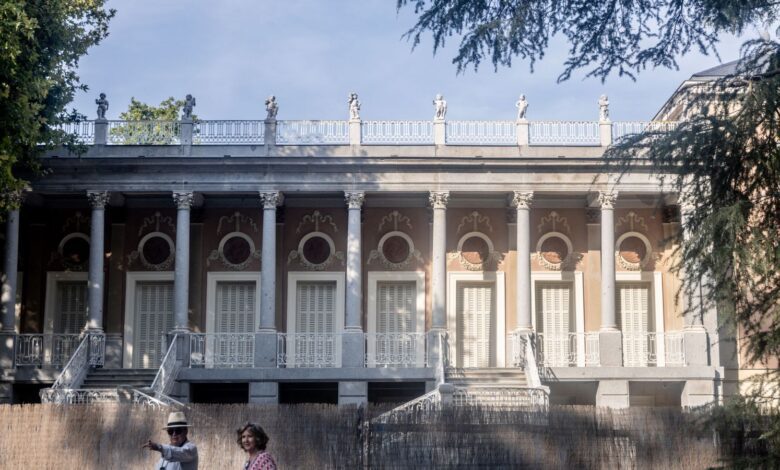
The El Capricho Palace in Madrid, built at the end of the 18th century by the initiative of María Josefa Pimentel Téllez-Girón, Duchess of Osuna, is preparing for a new chapter in its history. In 2027, the building will join the city’s museum network, opening its unique interiors and exhibitions to the public, dedicated to the history of the estate, its owners, and the cultural context of Enlightenment-era Madrid.
At the time, the palace attracted Spanish nobility and aristocracy. Its halls were adorned with works by leading artists, and the surrounding gardens became a model for the development of landscape art in Spain. The Duchess of Osuna, renowned for her contribution to culture, acquired the estate in 1783. At that time, the grounds already featured a country house with a garden, utility buildings, and farmland. It was the duchess and her husband who initiated a major reconstruction and expansion of the palace and park.
Inspired by European trends, the duchess decided to transform the grounds in line with the fashion for Anglo-Chinese landscape gardens. To achieve this, renowned gardeners such as Pablo Boutelou, Jean-Baptiste Mulot, and Pierre Provost were invited. The latter supervised the works until 1810, when he was executed by French troops in Alameda de Osuna. Later, the decorative artist Ángel María Tadei continued the design of the gardens.
Architecturally, the palace acquired a new rectangular layout with corner towers, reminiscent of the traditions of old Spanish alcazars. Inside, spacious reception halls were created, along with separate apartments for the duke and duchess, as well as rooms for staff and storage. Special attention was paid to decor: the walls were adorned with works by Francisco Goya, while the ceilings and floors featured rare materials and mosaics.
In the 19th century, the palace remained a center of cultural life. However, after the death of the duchess and the subsequent bankruptcy of the Osuna family, the estate changed hands several times. In the early 20th century, it was purchased by banker Bauer, and during the Civil War, the building was used as the Republican headquarters. It was during this period that underground galleries and shelters were constructed, which have survived to this day.
In 1974, the estate became the property of the Madrid municipality in a severely neglected state. The first restoration efforts focused on reviving the gardens, which were fully opened to the public in 1999. From 2022, a major reconstruction of the palace itself began, including the restoration of façades, the roof, historic halls, and the installation of modern facilities for the future museum.
As a result of the restoration, visitors will be able to see the restored ceiling paintings in the Duke’s and Duchess’s offices, as well as the original floor of the grand dining hall, inspired by the famous mosaic from Issos. A special place in the exhibition will be dedicated to the hall where the renowned masquerades and balls were once held, as well as works by Goya such as “El aquelarre” and “El conjuro.”
The opening of the museum will provide an opportunity not only to discover 18th–19th century architecture and art, but also to learn more about the life of the Spanish aristocracy, the development of landscape design, and the cultural trends of the Enlightenment era. In the future, the El Capricho Palace will become an important part of Madrid’s cultural scene, offering residents and visitors a unique perspective on the city’s history.