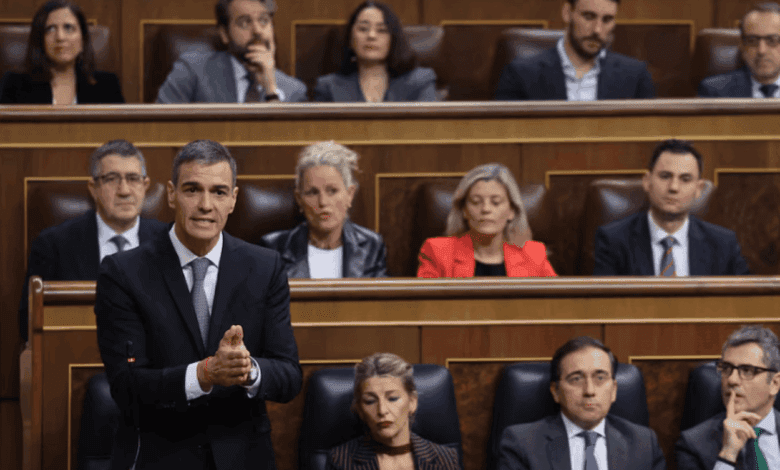
A new political storm is brewing in Spain as Prime Minister Pedro Sánchez finds himself at the center of scandals and legal proceedings, reminiscent of the turbulent final days of the Felipe González and Mariano Rajoy eras. However, unlike his predecessors, Sánchez is showing remarkable resilience and has no intention of stepping down, despite pressure from all sides.
Recalling 1997, when Felipe González had already left office, his comments about the “imbalance of power in favor of the judiciary” and the “daily spectacle in the courts” sounded like the outcry of a politician exhausted by endless investigations. At the time, Alfonso Guerra, another heavyweight of the Socialists, sharply criticized the Supreme Court, accusing it of being politicized after the verdict in the Filesa case. Today, these statements seem strikingly relevant—as if they were made by Sánchez’s supporters, angered by the latest court decisions.
Historical parallels
The situation Sánchez faces today evokes memories not only of the end of the González era, but also of the final months of Mariano Rajoy’s tenure. In 2017, Sánchez himself demanded Rajoy’s resignation after his testimony in the Gürtel case, citing arguments now used against him. Back then, Rajoy defended himself by saying he trusted people who let him down—now, Sánchez says much the same about his own associates.
Corruption scandals, allegations of misconduct, and pressure from the opposition and the media are once again shrouding Spanish politics in a thick fog of suspicion. In the past, such circumstances have led to snap elections or votes of no confidence. González was forced to resign after losing the support of Catalan nationalists, while Rajoy was ousted by the Socialists led by Sánchez following a high-profile court ruling.
Role reversal
Today, history repeats itself but with new protagonists. Sánchez now finds himself in a position where his government is teetering on the edge, with court cases and investigations giving neither him nor his party any respite. However, according to many observers, the current prime minister is distinguished from his predecessors by his iron determination to stay in power despite any obstacles.
Veteran People’s Party member Carlos Aragonés notes that both González and Rajoy showed a tendency to retreat at the end of their terms, while Sánchez displays persistence and a willingness to fight to the end. He compares the current situation to a well-known phrase from ‘Anna Karenina’: all happy governments are alike, but each unhappy government is unhappy in its own way.
Scandals and allegations
Reflecting on the 1990s, it becomes clear how extensive the accusations against the González government were: from financing terrorism (the GAL case) and illegal party slush funds (Filesa) to spy scandals and abuses within the Interior Ministry. High-ranking officials fled the country or ended up behind bars, while ministers and deputy prime ministers resigned one after another. The crisis atmosphere of that era was marked by fierce media battles and accusations against judges and journalists.
Today’s accusations against Sánchez’s team may seem less far-reaching, but the public mood has grown far more tense. Political polarization has reached new heights, and both sides are now slinging accusations at the courts and the media. Familiar figures like Federico Jiménez Losantos continue to criticize the government, while new media players have picked up the baton.
Political climate
The former president of Andalucía, Manuel Chaves, notes that today’s opposition acts much more aggressively than in previous decades. According to him, the influence of former prime minister José María Aznar on the Partido Popular remains strong, and new ‘Trumpist’ currents are only fueling further radicalism. Chaves also points out the political landscape has changed: where a two-party system once dominated, politicians now have to find compromises within a multi-party environment.
In the 1990s, González faced opposition not only from the right-wing but also from leftist forces such as Izquierda Unida, which added further pressure. Today, Sánchez leads a coalition government, a fact that experts say only intensifies the political tensions both in parliament and in society.
The Economic Factor
Unlike his predecessors, Sánchez has so far benefited from a relatively stable economic situation. González and Rajoy faced crises that fueled public discontent and made corruption scandals even more painful. During Rajoy’s tenure, the economic downturn and high-profile scandals like the ‘black accounts’ (Bárcenas) and Gürtel cases undermined trust in the government and resulted in the loss of the parliamentary majority.
Today, despite legal and political turmoil, economic indicators are working in favor of the sitting prime minister. This allows him to hold his ground and avoid making concessions that, in the past, cost other leaders their positions.
Rhetoric and Defense
Ferran Bel, a former deputy from the Catalan nationalist bloc, notes that the defensive rhetoric of governments has changed little over the decades. The same arguments used by González and Rajoy are now being voiced by Sánchez’s ministers. However, the overall atmosphere has become much more tense, and society more divided.
In the end, despite all the parallels with the past, the current political crisis in Spain is unfolding according to its own rules. Unlike González and Rajoy, Sánchez is not quick to give in and continues to fight on, despite pressure from the courts, the opposition, and the media.