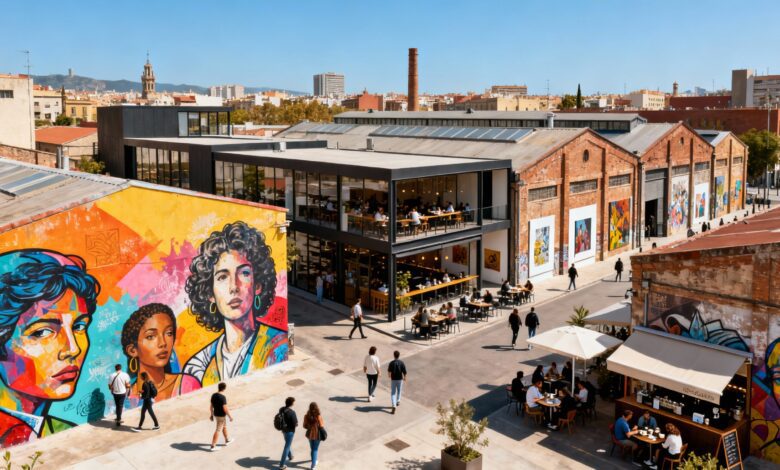
In 2026, the Poblenou district in Barcelona suddenly found itself in the global travel spotlight. It was named one of the most fascinating places on the planet to visit. And this is no ordinary tourist gimmick—there really is a lot here to see and experience. Poblenou has long outgrown its reputation as just an industrial suburb where factories once hummed and chimneys smoked. Today, it’s a space where past and present collide at every turn, with an atmosphere reminiscent of Havana, New York, and, of course, Barcelona itself.
This district lacks the typical tourist bustle that has long overwhelmed the city center. Here, you can stroll streets where colorful houses stand alongside modern galleries, and former factory buildings have become theaters, museums, and creative studios. Poblenou is a place where Barcelona’s industrial memory not only survives but has found new life.
Urban Transformation
The transformation of Poblenou didn’t happen overnight. Back in the 19th century, it was the industrial heart of Barcelona, but over the years the factories closed, giving way to new spaces. Today, museums like Can Framis operate here, alongside theaters such as Sala Beckett and creative hubs like Palo Alto. Old brick walls now provide the backdrop for exhibitions, concerts, and performances. A spirit of change is felt in every alley, and locals take pride in their district becoming a model for other European cities.
The 22@ project deserves special attention, as it has breathed new life into Poblenou. Thanks to this initiative, startups, design studios, and cultural projects have flourished here. Plaça de les Glòries—a once-busy traffic hub—has been transformed into a green park with spaces for relaxation and walks. All of this has made the district attractive not only to tourists, but also to Barcelona residents themselves.
Art and Gastronomy
Poblenou is a true paradise for street art enthusiasts. The area’s walls are covered in graffiti that change almost every week. Local and visiting artists turn abandoned buildings into enormous canvases, and guided art tours have become one of the district’s main attractions. The NauArt space stands out in particular, where you can not only see works by street artists but also meet them in person.
Poblenou’s culinary scene rivals its artistic side, with new restaurants offering Catalan and international cuisine popping up across the district. Among them are Casa Güell, Atipical, and the historic Can Recasens, where you can sample traditional tapas and wines. A stroll along Rambla del Poblenou is a treat in itself: here, old cafés, modern bars, and boutiques create a unique atmosphere.
A Journey Through Time
In 2026, Barcelona will mark the centenary of Antoni Gaudí’s death, and the city has become the world architecture capital. Poblenou fits perfectly into this context: here, industrial heritage blends seamlessly with contemporary design. Strolling through the district is a journey through time, where old smokestacks stand beside futuristic buildings, and cozy courtyards conceal unexpected works of art.
Despite growing interest from tourists, Poblenou retains its unique pace. There are no crowds here, and locals are in no hurry to cater to visitors. This is a place for those who appreciate leisurely walks, enjoy finding new meaning in familiar things, and aren’t afraid to get lost in a maze of alleys. Poblenou is Barcelona waiting to be rediscovered, again and again.