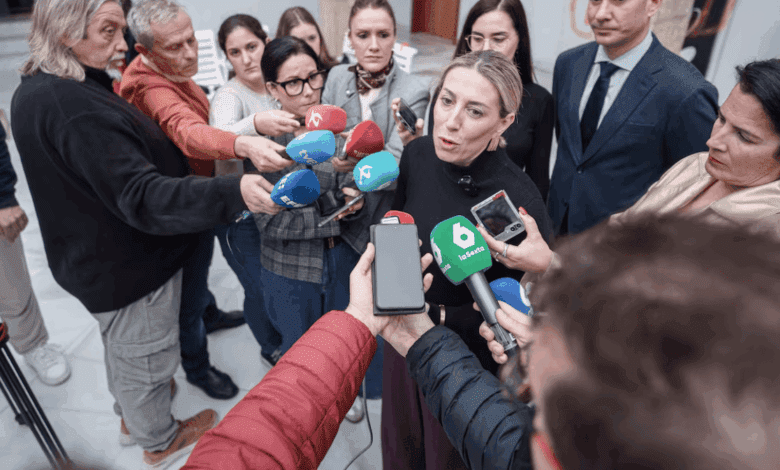
The situation in Extremadura is once again in the national spotlight: the outcome of political negotiations will determine not only the future of the region but also the stability of Spanish politics. María Guardiola, representing the Partido Popular, has announced her intention to run for the head of the autonomous government, despite not having final agreements with other parties. This move could lead to a long-awaited resolution of the protracted institutional crisis, but also carries the risk of a new round of confrontation.
In recent months, the people of Extremadura have witnessed a prolonged struggle between the main political forces. Following the December elections, Partido Popular gained a significant advantage; however, forming a government requires support from other factions. Guardiola emphasizes that her duty is to carry out the will of the voters, but she faces stiff resistance from both Vox and the socialists.
Vox insists on guarantees of real change and demands greater influence in the future government, causing tension in the negotiations. The socialists, meanwhile, accuse Guardiola of stalling the process and refuse to support her candidacy, even by abstaining. As a result, the region has slipped into political paralysis, and residents are increasingly voicing frustration over the lack of decisions.
Negotiations and contradictions
María Guardiola, after meeting with the president of the Extremadura Assembly, Manuel Naharro, stated that she is ready to present her agenda and submit it for parliamentary debate. She highlighted the region’s economic achievements: record-low unemployment and the lowest poverty levels in recent years. According to her, any further delay could jeopardize this progress.
However, negotiations with Vox have reached an impasse. Guardiola notes that the party demands full implementation of its agenda and significant representation in the executive branch, which she considers excessive. She has openly stated that Partido Popular will not become a copy of Vox and insists on a proportional and balanced agreement based on shared principles.
Attempts to establish a dialogue with the Socialists have also failed. Guardiola appealed to PSOE representatives to abstain during the vote to break the deadlock, but was refused. The Socialists accuse her of being unable to negotiate and claim that Partido Popular has not made any official requests for their support.
Opposition response
Vox continues to insist on the need for real change and demands guarantees that its conditions will be taken into account. Party spokesperson Álvaro Sánchez Ocaña stated that the choice is between supporting PSOE or Vox, emphasizing that the main issue is not the distribution of positions, but the implementation of new policies. He also noted that the pressure is now on Partido Popular, not on their opponents.
Unidas por Extremadura has strongly criticized Guardiola. Their representative, Irene De Miguel, called the negotiations “shameful and childish,” and referred to Guardiola herself as “a hostage of Vox.” According to this group, the far-right is not interested in the region’s fate and is simply using the situation for its own ends.
In the regional Assembly, President Manuel Najarro confirmed that Guardiola’s candidacy will be submitted for consideration, and the date for the investiture plenary session may be set no later than March 3. He urged all factions to focus on the well-being of Extremadura and seek compromise, as residents are tired of political games and are waiting for stability.
Impact on the region
The political crisis in Extremadura is affecting thousands of families and businesses. Delays in forming the government are holding up key decisions on the budget, social programs, and investments. While the region’s economic indicators remain among the strongest in Spain, further delays could cause the development momentum to stall.
Looking back at recent events in other regions, parallels can be drawn with the situation in Catalonia, where transport chaos and political disagreements led to mass protests and demands for resignations. More about how a political crisis can destabilize an entire region was detailed in the article on the consequences of transport chaos in Catalonia.
In Extremadura, despite economic progress, the risk of similar scenarios remains if political forces fail to reach an agreement. Residents of the region hope for a swift resolution of the crisis and a return to normal government operations.
Context and examples
In recent years, Spain has repeatedly faced situations where the formation of regional governments was delayed due to complicated negotiations between parties. In 2023, a similar crisis occurred in Murcia, where the prolonged lack of a coalition agreement led to a temporary parliamentary deadlock. In Andalusia in 2024, negotiations between Partido Popular and Vox were also marred by mutual accusations and threats to derail the vote.
Such political deadlocks often cause public discontent and erode trust in government institutions. In some cases, this results in snap elections or the creation of unstable coalitions, which negatively affects the implementation of long-term projects. When a region’s economic and social indicators depend on timely decision-making, protracted negotiations can have far-reaching consequences for the entire country.