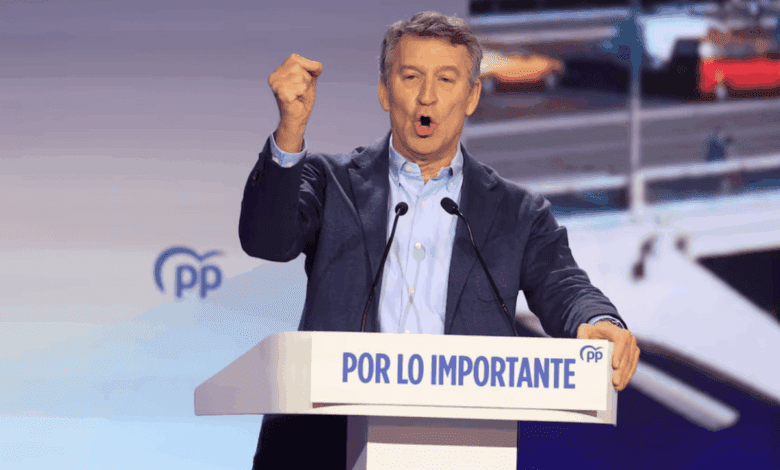
A new political conflict is erupting in Spain, tied to the tragic railway accident in Adamuz (Córdoba). After the disaster claimed dozens of lives, the opposition stepped up pressure on the government, demanding immediate explanations and personal accountability. Leaders of the Partido Popular (PP) did not limit themselves to criticizing the transport minister—they openly accused the president of inaction and attempting to evade responsibility.
Monday morning began with bold statements: Alberto Núñez Feijóo, head of the PP, announced plans to urgently summon Pedro Sánchez to the Senate for a public report on the circumstances of the tragedy. Thanks to their absolute majority in the upper house, the party can initiate a special session as early as this week. At the same time, the president of the Madrid Community, Isabel Díaz Ayuso, went even further, demanding the immediate resignation of the head of state, whom she considers principally responsible for what happened.
Two fronts of pressure
A rift in tactics has emerged within the Partido Popular itself: the central leadership is acting cautiously, while the Madrid wing is taking a much harder line. Throughout the week, PP rhetoric has grown increasingly sharp, and Ayuso has repeatedly emphasized that Sánchez bears direct responsibility for the catastrophe. According to her, the president not only fails to control the situation but deliberately shifts blame onto subordinates, shuffling ministers and appointing people whose competence is questioned.
Feijóo, who had previously favored more cautious wording, shifted his tone under pressure from party colleagues and the public. On Friday, after the official mourning period ended, he demanded that Sánchez voluntarily appear before Congress and provide explanations. Otherwise, he said, the PP would use its influence in the Senate to secure a separate hearing on the matter.
Government response and new accusations
The government’s response was swift: as early as Saturday, Pedro Sánchez applied to speak in Congress, where he intends to address not only the Adamuce tragedy but also other international meetings and events. However, the opposition saw this move as an attempt to blur the agenda and avoid tough questions. Feijóo called the president’s initiative “a joke,” accusing him of trying to mislead the public and prolong the review of the case.
In the Senate, the PP insists on a separate session devoted exclusively to the railway disaster. The party leader stresses that the government is acting arrogantly, providing excessive information and steering the discussion off course. According to Feijóo, the transport minister should not remain in office, and the president is deliberately protecting him to avoid personal accountability.
Ayuso’s rhetoric and intra-party disagreements
Isabel Díaz Ayuso, known for her tough stance, once again delivered sharp criticism against the government. She stated that Sánchez should be the first to resign, as he was the one who appointed the ministers responsible for serious mistakes in managing the rail network. According to her, every new incident in the country becomes a reason to look for scapegoats, but the president always remains on the sidelines.
Ayuso recalled cases where people with questionable reputations were appointed to key positions, as well as the scandalous purchase of trains unsuitable for existing tunnels. She emphasized that the party is united in its demands, despite differences in pace and rhetoric between central and regional leadership. In her view, the PP acts in a coordinated manner, and disagreements concern only the ways of communicating their position to the public.
Comparisons and Historical Parallels
During the discussion, Feijóo drew parallels with other tragedies, recalling cases when high-ranking officials resigned under pressure from the public and victims’ families. He pointed out that in Spain’s history, there have been instances when not only ministers but also regional leaders took responsibility for disasters. According to him, the current situation is the most serious in the history of the country’s high-speed railways, and the lack of response from the leadership is puzzling.
Internal party debates continue over how tough their stance towards the government should be. Some regional leaders support Ayuso’s radical approach, while others prefer a more measured position. Nonetheless, everyone agrees the tragedy in Adamuz has become the point of no return for holding top officials politically accountable.
Political fallout
The scandal surrounding the Adamuz accident has already triggered a sharp escalation in the country’s political climate. The opposition is demanding not only the resignation of the transport minister, but also that of the president himself, accusing him of trying to cover up the true causes of the tragedy. The authorities, in turn, are striving to maintain control of the situation, offering their own discussion formats and stalling the decision-making process.
In the coming days, a series of high-profile statements and new demands from the opposition is expected. The issue of individual responsibility for the disaster is taking center stage in Spain’s political agenda, while public pressure on the government keeps growing. The country is gripped by an atmosphere of uncertainty, and many are questioning whether this crisis will lead to significant personnel changes at the very top.