Recent events have drawn the attention of Spanish politicians and experts to the relationship between the Vatican and the United States. The conflict between Pope Leo XIV and Donald Trump has gone beyond ordinary diplomatic disagreements, touching on issues of morality, war, and the role of religion in politics. For Spain, where matters of peace and international stability have always been central to public debate, such statements could influence perceptions of foreign policy and attitudes towards religious leaders.
For the first time in many years, the head of the Catholic Church has found himself at the center of a public dispute with the US president. Donald Trump, using his social platform Truth Social, sharply criticized the Pope, calling him weak and questioning his moral authority. In response, Pope Leo XIV emphasized that he does not intend to engage in political debates and will continue to promote ideas of peace and dialogue. According to several Spanish analysts, this rhetoric could heighten tensions between religious and political institutions and shape public opinion in Europe.
Historical parallels
Comparisons to previous conflicts between the Vatican and world leaders quickly surfaced. There were instances when Pope John Paul II criticized George Bush’s Iran policy, and when Pope Francis opposed the construction of the wall on the US-Mexico border. However, the current situation stands out for its scale and intensity. In Spain, where the Catholic Church traditionally plays a significant role, such incidents spark widespread media attention and public discussion.
History has seen cases where heads of state insulted the Pope, such as Stalin in 1935 or Napoleon Bonaparte at the end of the 17th century. Yet in the 21st century, such an open confrontation is unusual and highlights the shifting balance between religion and politics. Spanish experts suggest these events could prompt a reconsideration of the Church’s role in international relations.
Response to the statements
The conflict was triggered by a recent initiative from Pope Leo XIV, who called for diplomatic solutions to conflicts and condemned threats to use force against Iran. Donald Trump responded with a series of insulting messages, questioning not only the Pope’s religious authority but also his political influence. In turn, the Pope stated his mission is to spread the Gospel and support peace, not to participate in political games. He also voiced concern about the use of Christian ideas for political purposes, which he believes is apparent in the White House.
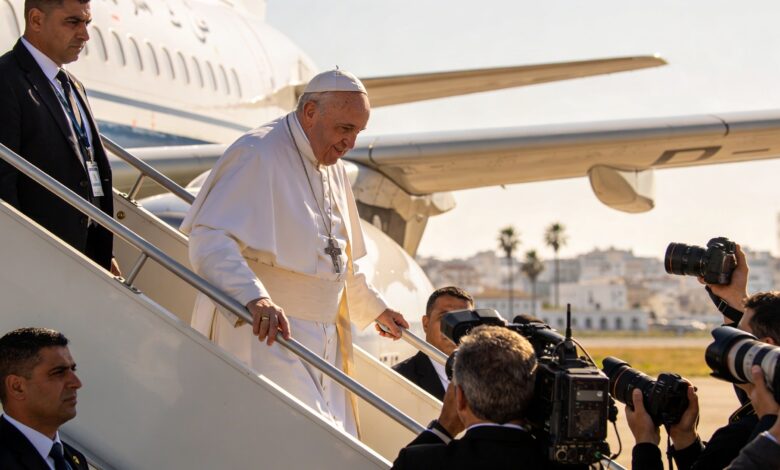
During his visit to Algeria, the Pope received words of support from Italian President Sergio Mattarella and several European politicians, including Giorgia Meloni and Matteo Salvini. Even among Trump supporters, some considered attacks on the Pope to be inappropriate. Spanish media are actively discussing how such statements could affect relations between Europe and the US as well as domestic politics within EU countries.
African tour and upcoming visit to Spain
Pope Leo XIV began his first visit to Africa with calls for peace, respect, and dialogue among peoples. During his flight to Algeria, journalists reminded him about his upcoming trip to Spain. The Pope was presented with fragments of boats used by migrants to reach the Canary Islands, as well as a replica of the San Bernabé tower spire from the Sagrada Família in Barcelona. The Pope remarked that he fondly remembers his time in Spain and considers the Sagrada Família a unique cultural and religious symbol.
The Pope’s visit to Spain has once again sparked discussion about the role of the Church in the country’s public life. In recent years, issues of migration, integration, and intercultural dialogue have become increasingly important for Spanish society. As noted by russpain.com, such visits often prompt a rethinking of national identity and encourage new points of contact between religion and the state. In this context, the experience of Catalonia is particularly interesting, where the Pope’s visit previously triggered lively debates about balancing the Church and regional identity — read more about this in the article about challenges for Catalonia and the Church.
In recent years, Europe has experienced several high-profile conflicts between religious leaders and politicians. For example, in 2024, there was much discussion about the Vatican’s response to the migration crisis in the Mediterranean, and in 2025, attention turned to debates over the Church’s role in shaping EU policy. These events show that the relationship between religion and power remains a relevant issue for Spain, where the Church continues to influence public processes and shape the national agenda.