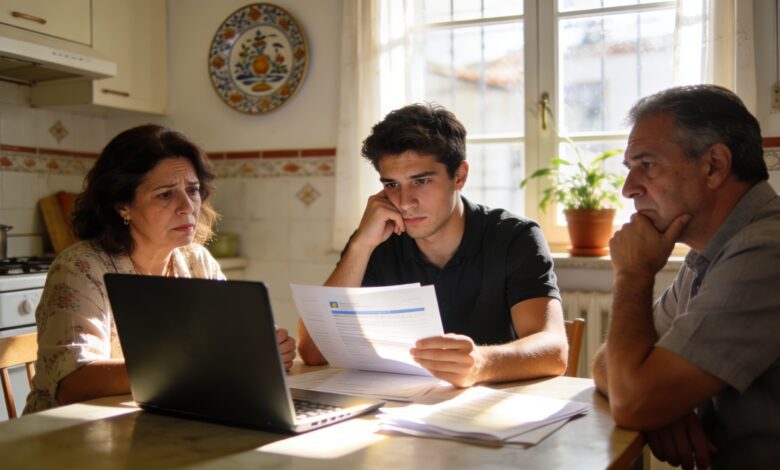
In 2026, new regulations will come into force in Spain, directly impacting the financial situation of young people and their families. Now, living with parents will no longer be an obstacle to receiving state support in the form of Ingreso Mínimo Vital (IMV). This measure aims to reduce poverty among young people who face challenges in the job market and cannot afford separate housing.
Previously, living with parents automatically disqualified applicants from IMV, as it was assumed the family already had sufficient resources. However, the government now recognizes that many young Spaniards are forced to remain in their parental home due to unstable employment and low income. Under the new criteria, such applicants can be considered a separate economic unit under certain conditions.
IMV eligibility criteria
There are special requirements for young people aged 23 to 29. First, the applicant must prove they previously lived independently for at least two years and were registered with the social security system. Second, annual income for the previous period must not exceed the set limit — in 2026, this is €8,803.20 for a single adult.
If there is no experience of independent living, an alternative is allowed: a certificate of social exclusion issued by municipal authorities can be provided. This document confirms that the young person, despite living together, is not part of the parents’ economic unit. All data is verified through the tax authorities, which rules out the possibility of abuse.
Employment and state support
An important innovation is the possibility to combine receiving IMV with having a job. If wages do not exceed a certain threshold, the allowance is not cancelled but adjusted according to income. This encourages job searching without fear of losing support when accepting a low-paying position.
Applying for IMV has become easier: the entire process is available online through the Seguridad Social electronic platform. To verify your identity, just upload a photo of your document and confirm your identity by email. The application is processed within six months, and payments start from the first day of the month following the submission of documents.
Impact on families and the labor market
Changes to the IMV rules reflect the authorities’ growing concern over the labor market situation among the youth. According to russpain.com, many young Spaniards are forced to postpone living independently due to high rental costs and unstable work contracts. The new support system could help reduce social tensions and offer a chance to those in difficult situations.
All IMV recipients are required to file an annual tax return, even if their income is below the taxable threshold. This allows the government to monitor the accuracy of payments and prevent fraud. A similar approach is already used in other social programs, for example, for those over 52 years old.
Context and recent changes
In recent years, Spain has been actively reforming its social welfare system to adapt to new economic realities. In 2025, similar measures were discussed for other vulnerable groups, and some regions have already piloted projects for individualized income assessment. The impact of such changes on families and young people is becoming noticeable: according to RUSSPAIN, there is a growing number of requests for assistance, as well as an increase in the number of young people receiving state support for the first time. In other EU countries, similar reforms have also led to greater independence among youth, although affordable housing remains a pressing issue. It is worth noting that in Barcelona, recent decisions have affected the city’s infrastructure and cultural life— city authorities have changed their approach to developing the city center, which also reflects a trend towards finding new solutions to support the population.
For reference: Ingreso Mínimo Vital is a basic social benefit introduced in Spain to combat poverty and social exclusion. In recent years, eligibility criteria have been repeatedly adjusted to reflect changes in the labor market and the rising cost of living. In 2024–2025, discussions focused on expanding access to the benefit for different age groups and tightening oversight of recipients’ incomes. The introduction of new rules for young people is a logical extension of these reforms. Similar support programs in other European countries are also undergoing changes to better address current challenges.