A tense political drama unfolded in Zaragoza on Sunday as leaders of the autonomous communities from the Partido Popular (PP) gathered to develop a unified strategy against the government’s proposed reform for distributing financial resources among Spain’s regions. At the center of the dispute is an initiative put forward by current Prime Minister Pedro Sánchez, which has already sparked outrage among the majority of regional leaders.
The issue of revenue redistribution between the central government and the autonomous regions has long been a flashpoint in Spanish politics. The new arrangement, proposed by Finance Minister María Jesús Montero, would increase the share that regions receive from personal income tax (IRPF) and value-added tax (IVA). Under the plan, regions would get 55% of IRPF and 56.5% of IVA, which is projected to boost total regional funding by €16 billion by 2027. However, despite the promise of additional resources, most regions have pushed back vehemently against the initiative.
Rising tensions
At the latest session of the Fiscal and Financial Policy Council (Consejo de Política Fiscal y Financiera), all autonomous communities except Cataluña openly opposed the proposed mechanism. Their main argument was that, in their view, the scheme is fundamentally distorted by political deals between the central government and Catalan separatists. Behind the scenes, regional leaders admit they fear the new model will entrench inequality and grant special advantages to Cataluña, potentially setting a dangerous precedent for the entire country.
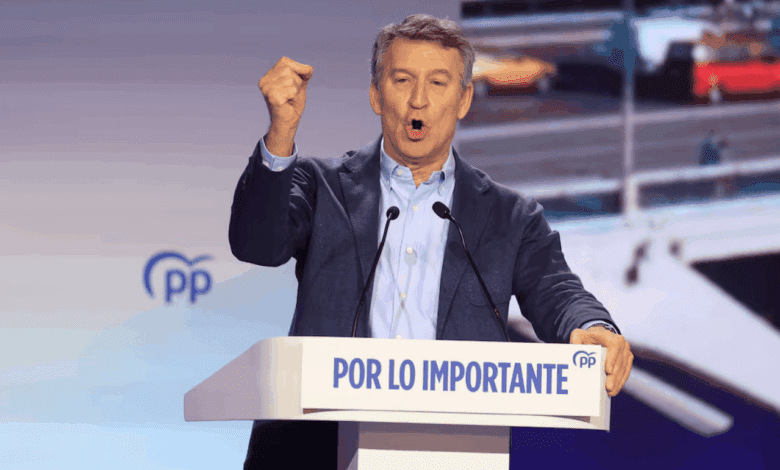
Alberto Núñez Feijóo, leader of the PP, did not hide his emotions, accusing Sánchez of “playing with the principle of equality” among Spaniards. He claims the new system ignores the real needs of citizens and simply serves the political demands of independence supporters. Feijóo intends to convey the regions’ stance directly to the prime minister at their upcoming meeting at the Moncloa residence.
Opposition strategy
There is an unusual sense of unity within the Partido Popular: all regional leaders agree that concessions are unacceptable. In Zaragoza, discussions go beyond the details of a possible alternative project, focusing also on strategies to pressure the central government. Behind closed doors, there are calls for mass protests and even threats of legal action if the government refuses to compromise.
Particular frustration has arisen from the fact that negotiations over the reform were conducted behind closed doors, and the key parameters of the scheme had already been agreed with the Catalan Republican leader Oriol Junqueras before any official discussions with the other regions. This has fueled a wave of mistrust and suspicion toward Madrid, deepening the already significant divide between the central government and the regions.
Regional response
Most autonomous communities fear that the new model will reallocate funds in favor of Catalonia and possibly País Vasco, leaving the other regions at a disadvantage. The reaction has been especially sharp in Andalucía, Valencia, and Galicia, where budget issues have always sparked heated debates.
At the same time, the PP has made it clear: if the party comes to power, it intends to overhaul the entire funding system from scratch. In Zaragoza, the core principles of a future reform are already under discussion—transparency, equality, and consideration of each region’s demographic characteristics. For now, however, all efforts are focused on blocking Sánchez’s initiative and giving it no chance of implementation.
Political intrigue
The situation around the funding reform has become a litmus test for all of Spanish politics. The issue is not just about money, but also about the balance of power between the center and the regions, as well as the future of the country’s territorial integrity. Decisions being made in Zaragoza today will determine not only regional budgets, but the very structure of Spain in the coming years.
As both sides prepare for another round of negotiations, tensions are rising. There is a sense in the air that a compromise is unlikely, and ahead lies a new phase of political struggle that could reshape the balance of power across the entire country.