From early morning, the Macarena district in Seville has been buzzing with unusual excitement. At six a.m., the doors of the basilica opened to the faithful, who had been waiting for this moment for almost four months. During that time, the city’s main shrine—the statue of the Virgin Mary of Macarena (Esperanza Macarena)—was undergoing restoration, which sparked a wave of emotions and debate among locals and devotees.
Restoration became necessary after an unsuccessful conservation attempt altered the Madonna’s expression and drew criticism from thousands of worshippers. Many no longer recognized their “Pearl of San Gil” (San Gil), as Antonio Rodríguez Buzón called her in the mid-20th century. Now, after the work of restorer Pedro Manzano and under the oversight of the Andalusian Institute of Historical Heritage, the statue’s original gaze and cherished features have been restored—much to the relief of Sevilla’s residents.
The return of the shrine
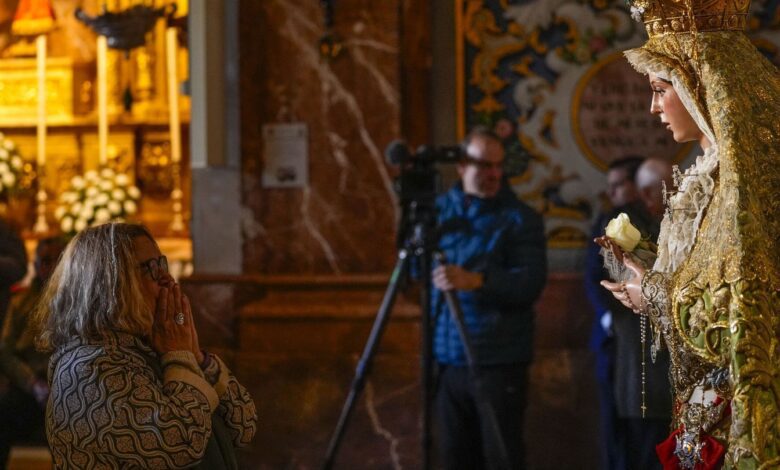
Since the basilica opened its doors, the line to see the statue has not stopped for a minute. Families, children, the elderly, and young people all came to witness the restored Macarena. At times, the wait stretched to six hours, but no one left despite fatigue. The entire neighborhood was decorated with posters and photos announcing the Madonna’s return, and local cafés and bars opened earlier than usual to welcome the influx of visitors.
These days, Seville is hosting a multitude of events dedicated to the Feast of the Immaculate Conception. The city is filled with groups of student musicians who, after performing by the Murillo monument in the city center, hurry to the basilica to pay homage to the sacred image. The atmosphere in the neighborhood felt like a grand celebration, with everyone eager to be part of a historic moment.
Public reaction
Opinions among Sevillians about Macarena’s new look are divided. Some note that the statue appears lighter, while others say that her gaze has returned to how it was in the early 20th century. Experts claim that the current shade of polychromy is as close as possible to the original, and that over time, the color will look even more natural. Many compare the Virgin’s present appearance with century-old photographs, recalling the time when the Macarena brotherhood was just beginning its rise to prominence.
People from all walks of life could be seen waiting in line: from well-known capatazes to ordinary parishioners, from elderly women moved to tears to the visually impaired, who were allowed to touch the statue. Musicians played traditional marches and saetas, while the Carmen de Salteras orchestra held a small neighborhood parade in honor of the holy image’s return.
Changes within the brotherhood
These days, the Macarena brotherhood has also seen changes in its leadership. The new head brother, Fernando Fernández Cabezuelo, was elected to the position at the end of November, succeeding José Antonio Fernández Cabrero, who was unable to run again due to the expiration of his term. The election took place amid discontent among some parishioners over the restoration process, which was reflected in the voting results.
Fernández Cabezuelo has promised to unite the brotherhood after a turbulent period marked by the restoration and internal disagreements. However, the return of the Macarena has become a reason for reconciliation and joy, bringing everyone together around Sevilla’s beloved shrine.
A festive atmosphere
Throughout the day, the square in front of the basilica was filled with people. Some were waiting for their turn, some were simply observing the scene, while others visited nearby bars to discuss what they had seen. This weekend, Seville welcomed a record number of visitors, many of whom came specifically to see the restored Macarena.
Worshippers still have two days of veneration ahead, followed by the traditional annual ‘besamano’ ceremony, which will take place in December at the Iglesia de San Gil. For many city residents, this event has become a true celebration, a return to their roots, and a symbol of unity.
If you didn’t know, the Macarena Brotherhood (Hermandad de la Macarena) is one of Seville’s most famous religious organizations, founded in the 16th century. Its main sacred object is the statue of the Virgin Mary of Macarena, created in the Baroque style and revered not only in Andalusia but far beyond its borders. Every year during Holy Week (Semana Santa), millions of pilgrims and tourists come to Seville to witness the famous procession featuring this statue. The 2024 restoration has become one of the city’s most discussed topics and sparked widespread public reaction.