Spain is once again debating the safety and reliability of its rail system after two high-profile accidents that have shaken the country. Not only the victims and their families, but also the authorities’ actions, now under scrutiny, could impact the future of Catalonia’s and Spain’s entire transport system. The question of how top officials respond to such tragedies has sparked intense debate, and the support given to the transport minister has led to unexpected consequences.
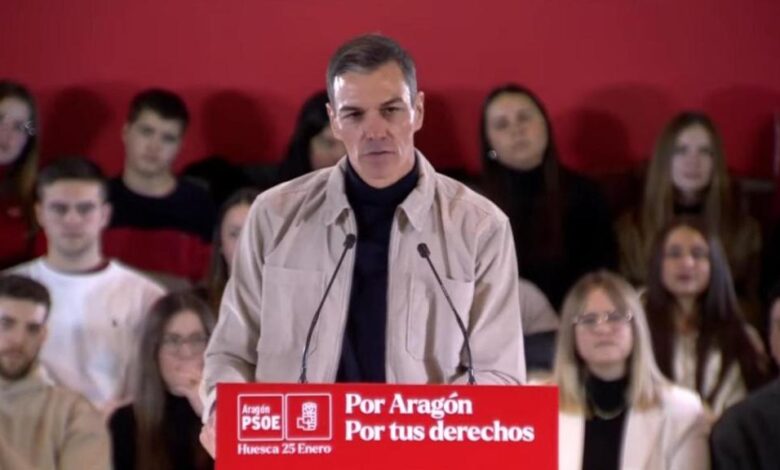
Prime Minister Pedro Sánchez arrived in Huesca in the midst of the election campaign to personally offer condolences to the victims of the disasters in Adamuz (Córdoba) and Barcelona. His speech immediately drew attention: the head of government not only acknowledged the contribution of rescuers and local residents, but also emphasized how the authorities respond to such tragedies. Sánchez stressed that in these situations, not only speed matters, but also transparency and a willingness to take responsibility.
Response to the tragedies
A special part of Sánchez’s speech was dedicated to supporting Transport Minister Óscar Puente, who, according to the prime minister, ‘did not hide’ and ‘went out to meet people’ from the very first hours after the accidents. This move sparked mixed reactions: some appreciated the openness and promptness, while others saw it as a political maneuver amid criticism of the rail services. The question of whether enough is being done to prevent such incidents remains unanswered.
Sánchez stated that suburban train service in Barcelona is being restored around the clock, and promised to provide Catalonia’s residents with safe and modern transport. However, his refusal to support the Huesca-Zaragoza connection project puzzled part of the electorate, especially in light of promises to develop infrastructure. In campaign circles, there is speculation over whether this could become a decisive factor in the election outcome.
Political disagreements
In his speech, the Prime Minister also addressed economic issues, recalling GDP growth and the controversial topic of funding distribution among regions. Sánchez accused the opposition of rejecting proposals that could provide Aragon with millions of euros in additional funding. According to him, political disagreements hinder real regional development, and the lack of concrete proposals from opponents only makes the situation worse.
At the same time, there is growing public dissatisfaction with how resources are allocated and decisions on transport network development are made. Some experts believe the current crisis could prompt a review of the country’s transport policy priorities. Debates over who is responsible for what happened and how to prevent such tragedies in the future are ongoing on social media.
International context
To the surprise of many, Sánchez also addressed foreign policy issues, criticizing the US administration and Donald Trump. He stated that Spain does not intend to yield to external pressure and will defend its interests on the international stage. In particular, the Prime Minister emphasized that issues of sovereignty and equality in relations with other countries remain fundamental for the government.
These statements came amid discussions on Europe’s future and Spain’s role in shaping new alliances. Sánchez made it clear that the current course of strengthening the country’s position within the European Union and developing a coalition government will continue, despite external challenges and internal disagreements.
Public response
Debate continues in Spanish society over the effectiveness of authorities’ actions following the accidents and the real prospects for the restoration of rail service. Many are demanding greater transparency and accountability, while others fear that political maneuvering will overshadow the interests of ordinary citizens. In the run-up to the elections, the situation surrounding transport disasters and the government’s response has become one of the country’s most hotly debated topics.
While some see the actions of Sánchez and Puente as an example of a responsible approach, others point to unresolved issues and the need for systemic change. Whether the current crisis will lead to genuine reform, or remain merely a pretext for political statements, remains an open question.