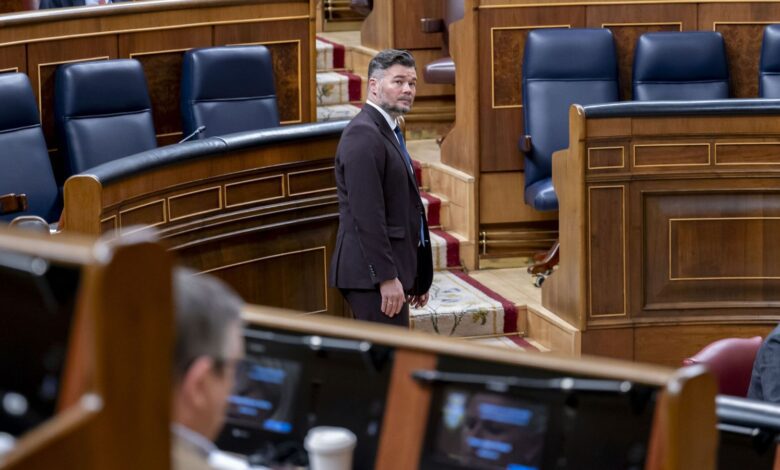
A split has once again emerged among Spain’s left-wing forces, potentially shifting the balance of power ahead of upcoming elections. Gabriel Rufián, a representative of Esquerra Republicana de Catalunya (ERC), has made the unexpected decision not to take part in the relaunch of the Sumar platform with Izquierda Unida, Más Madrid, and Comunes — a move that sends a clear signal to supporters of left-wing unity. At a time when every party is seeking maximum impact, such actions could alter the opposition’s overall strategy.
Rufián explained his refusal by saying he had already defined his political stance and saw no need to change his “home”—meaning his continued loyalty to ERC. He emphasized that his priority remains forming a broad coalition that would include not only left-wing forces but also those advocating for sovereignty, independence, and autonomy. This approach may present an alternative to the traditional alliances dominated by the major parties.
The challenges of forming a coalition
Although Rufián supports the idea of left-wing unity, he is not willing to join the Sumar initiative. According to him, he maintains good relationships with members of the organizations gathering in Madrid, but prefers to focus on strengthening ERC’s position. Meanwhile, representatives of Comunes, particularly Aina Vidal, have publicly invited Rufián to take part in the new alternative left project set to be discussed at the upcoming meeting in the capital.
Rufián responded that his task is to promote unity, but solely within his own party. He refrained from criticizing colleagues seeking to unite and remarked that any efforts in this direction deserve respect. However, his stance clearly points to ERC’s desire to maintain independence and not dissolve into a broader coalition.
Intraparty interests
Within the Spanish left, debates have long persisted on how best to join forces to achieve common goals. Rufián insists that any new project must be built around sovereigntist, independent, and autonomist groups, not just traditional leftist parties. He believes this is the only way to create a truly new political movement capable of competing with established structures.
In this context, it’s worth remembering how other political forces, such as Vox, leverage left-wing internal divisions to strengthen their own positions. A recent piece on Abascal’s regional strategy, in areas previously dominated by other parties, examines in detail why residents of smaller towns choose change and how this shapes the political landscape (more on Vox’s regional strategies).
Coalition prospects
Rufián’s stance could complicate efforts to form a united left-wing front at the national level. His emphasis on independence and prioritizing sovereign interests reflects growing distrust towards large coalitions, where individual parties risk losing their identity. At the same time, his openness to dialogue with other leftist organizations leaves room for future negotiations.
In the coming weeks, it will become clear whether left-wing forces can agree on joint action or if each will pursue its own path. Amid intensifying competition on Spain’s political stage, such decisions could prove decisive for the outcome of the next elections.
In recent years, attempts to unite left-wing parties in Spain have often faced internal disagreements and struggles for leadership. A notable example is the failed coalition between Unidas Podemos and PSOE, where disputes over key issues weakened both sides. Similar dynamics have been observed in other European countries, where leftist forces were unable to overcome differences and ceded ground to more conservative parties. In Spain, the question of left-wing unity remains open, and each new decision by the leaders could reshape the country’s political landscape.