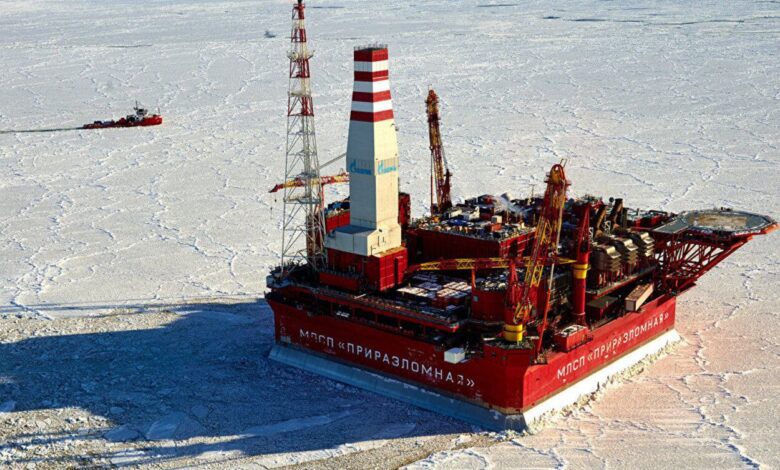
Russia has developed a unique technology that makes it possible to extract oil from Arctic fields without damaging the permafrost. This approach could be crucial for maintaining the stability of northern territories and preventing large-scale environmental problems.
Experts estimate that, at the current rate of production, Russia’s economically viable oil reserves will last for about a quarter of a century. Most untapped resources are concentrated in the remote areas of the Far North and permafrost zones. However, developing these fields poses serious technological and environmental challenges.
The main difficulty lies in the high viscosity of Arctic oil. Traditionally, extracting it to the surface requires heating the reservoir to high temperatures. The most common technique is injecting superheated steam, which effectively thins the oil and makes extraction easier. However, this method causes unwanted heating of surrounding rocks, resulting in permafrost thaw, which can lead to well deformation, accidents, and damage to infrastructure.
Alternative methods, such as chemical solvents or electric heating, are either too expensive or pose additional environmental risks. In-reservoir combustion and mechanical solutions also fail to fully address the issue, especially under the extreme climate conditions and complex geology.
To minimize heat loss and protect the permafrost, engineers use special insulated pipes that function like a thermos. This design channels heat directly to the oil reservoir without affecting the surrounding soil. However, until recently, there were no precise tools for calculating the optimal insulation parameters for each specific situation.
A team of scientists from Perm has developed a digital 3D model capable of accurately predicting heat distribution in wells equipped with insulated pipes. The model takes into account numerous factors: material properties, structural features, temperature fluctuations, and even possible insulation defects. This allows for site-specific adjustments for each well, preventing unnecessary costs and potential accidents.
The new system was tested at a field in the Komi Republic, where challenging permafrost conditions combine with highly viscous oil. The model demonstrated high forecasting accuracy both in standard and extreme operating conditions. This confirms its suitability for real-world industrial use.
The introduction of this technology opens new opportunities for tapping Arctic oil reserves without harming the environment. It helps reduce energy consumption, extends equipment lifespan, and prevents accidents caused by soil subsidence. Moreover, this solution helps preserve the natural balance and lowers greenhouse gas emissions, which is especially important in the context of global climate change.
Experts note that such developments could become the standard for the oil industry in northern regions. Precise calculations and a tailored approach for each well not only increase production efficiency but also ensure the safety of people and the environment.