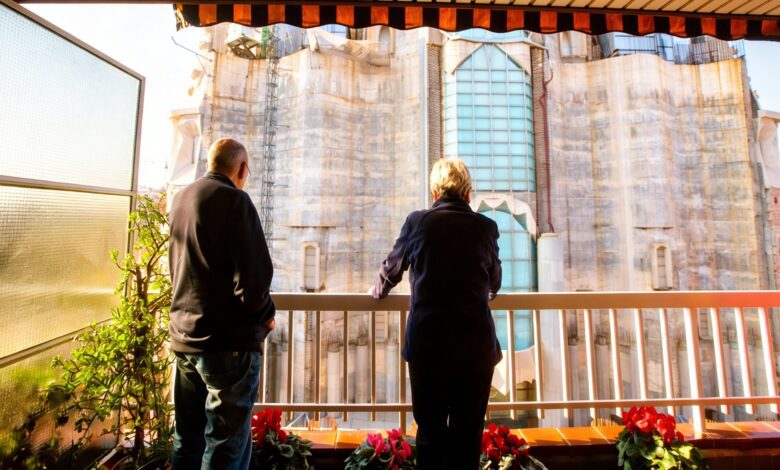
Change is brewing in Barcelona, potentially affecting hundreds of residents in the Eixample district. The future of buildings on Mallorca Street, directly opposite the Sagrada Familia façade, has become one of the city’s most talked-about topics. Negotiations between the city council and the basilica administration have reached the final stage, and their outcome will determine how the neighborhood’s appearance will change and where current residents will end up.
According to recent reports, the parties have nearly reached an agreement on the key issues. As El Pais notes, discussions have been constructive, with both sides aiming to find a compromise that will allow major works on the basilica to continue without leaving residents without homes. However, the exact number of apartments facing demolition and the proposed conditions for relocation have yet to be disclosed.
Negotiations and uncertainties
The focus is on the buildings on Mallorca Street that are impeding completion of the Gloria façade. The Sagrada Familia management has long considered expanding the premises, which would require clearing part of the residential stock. According to RUSSPAIN.COM, most residents already realize that change is unavoidable, but there is still no official information on how many apartments will be affected or the precise timing.
One of the proposed resettlement options is a plot previously purchased by the church, located just one block from the current homes. This land belonged to the company Aguas de Barcelona and sits on the same Mallorca street. This option would allow residents to remain within the neighborhood, which is particularly important for families who are accustomed to their surroundings and local infrastructure.
Residents’ reactions and the authorities’ position
Residents of the highlighted buildings have already begun preparing for a possible move. Many are concerned about how the relocation process will be organized and what guarantees they will receive. City authorities assure that no one will be left without housing within the area and promise that the process will be as transparent and fair as possible.
Barcelona’s Deputy Mayor Jordi Valls emphasized that all decisions are made with residents’ interests in mind. According to El Pais, negotiations are being conducted in an atmosphere of mutual respect, and both sides are striving to avoid conflicts. However, as previous urban projects have shown, such processes rarely proceed without disputes or dissatisfaction.
Context and comparisons
The situation surrounding the Sagrada Familia is reminiscent of other cases where large infrastructure projects required residents to relocate. For example, in Jumilla, recent decisions by authorities to restrict access to religious sites sparked a strong reaction from the local community, which was examined in detail in a report about how the Muslim community faced changes to their familiar routines. in the Murcia region. Stories like these highlight the importance of considering the interests of all parties when implementing urban initiatives.
In Barcelona, the issue is not only about relocation but also about preserving unique architectural heritage. The Sagrada Familia is a symbol of the city, and its completion has long been regarded as a national priority. However, any changes to the urban environment inevitably affect local residents, which is why negotiations between the church and the municipality attract so much attention.
Reference: similar cases
In recent years, Spain has repeatedly faced the need to relocate residents for major projects. In Madrid, the construction of new transport interchanges and metro lines has also sparked debates over compensation and conditions for those being relocated. In Valencia, the demolition of old neighborhoods has been discussed as part of efforts to renew the urban environment. Each time, these processes have been accompanied by public debate and required a balance between urban development and protecting the interests of local residents. Experience shows that transparency and dialogue with the population are key to successfully resolving such challenges.