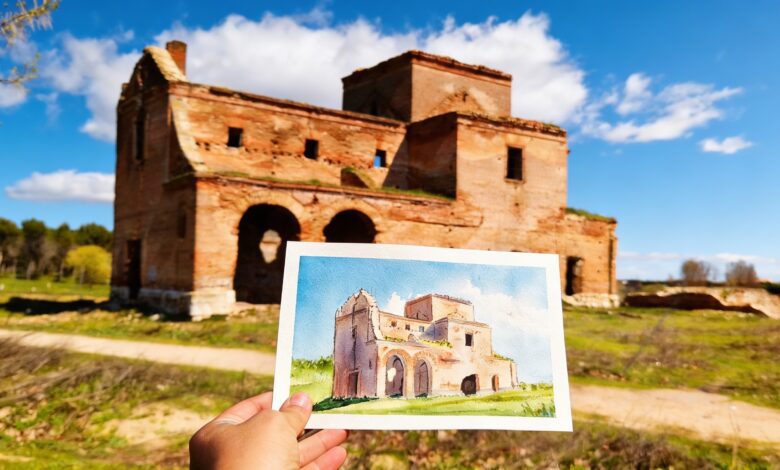
In Leganés, the future of the San Pedro Apóstol church—the only surviving building of the vanished settlement of Polvoranca—has once again come into question. The ruins of the church, built in the 17th century, are currently in a critical state and could collapse at any moment. The municipality has announced plans to allocate 5 million euros for restoration, but the fate of the project depends on budget approval.
Historical context
Polvoranca, founded in the 16th century after the sale of lands by the Count of Orgaz, long remained an inconspicuous village in the south of Madrid. In 1655, the San Pedro Apóstol church was erected here, with renowned architects Francisco de Mora and Juan Gómez de Mora involved in its creation. Over time, residents began to leave the settlement, preferring more developed neighboring towns such as Leganés. By the 19th century, Polvoranca had effectively disappeared from the map, and the church was abandoned.
Condition and risks
Since 2014, the San Pedro Apóstol church has been included in the Hispania Nostra Red List as a cultural heritage site at risk of disappearance. According to architect Alfonso Muñoz Cosme, a member of the scientific committee for this initiative, the building suffers from vandalism, graffiti has appeared on the walls, and traces of campfires are found inside. The fence around the ruins does not prevent unauthorized entry, and the structure itself could collapse even during a severe storm.
Legends and reality
The church has developed a reputation as a “cursed” place. Media outlets regularly report on alleged rituals performed inside, as well as finds of tarot cards and black candles. The disappearance of the village is blamed on illnesses, crop failures, and rumors of voices at night. However, experts believe the main reason is the relocation of residents to more promising settlements, as well as unsuitable living conditions.
Plans for Restoration
At the end of March, the mayor of Leganés announced plans to invest 5 million euros in restoring the ruins. However, the implementation of the project depends on the adoption of the city budget. Architect Muñoz Cosme notes that similar initiatives in the past have never been realized, and stresses the need at least to reinforce the remaining walls to halt further destruction. For Leganés, this site remains an important part of its historical heritage.