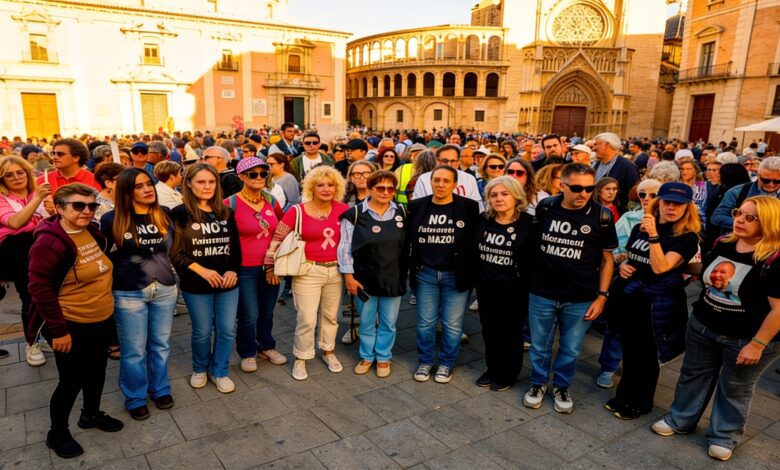
A large-scale demonstration took place in the center of Valencia, bringing together three groups of victims: those affected by the 2024 flood, members of the Amama Sevilla association—who faced a failed breast cancer screening program—and representatives of the Madrid-based organization 7291 Verdad y Justicia, which defends the rights of families of those who died in nursing homes during the pandemic. The event was held at Virgen Square near the government building of the autonomous region and became the first joint action by these associations.
The main demand of the participants was the resignation of the former head of the Valencian government, Carlos Mazón, and his summons to court over the tragedy of October 29, 2024, when 230 people died in the province as a result of the flood. Protesters also called for the accountability of the leaders of Andalusia and Madrid—Juan Manuel Moreno Bonilla and Isabel Díaz Ayuso—over decisions that, according to activists, led to mass deaths and suffering.
Accusations of institutional pressure
According to representatives of Amama Sevilla and 7291 Verdad y Justicia, joining together with Valencian activists was a response to the “inhumane treatment” and “institutional pressure” from the authorities. Leaders of the associations emphasized that they are united not only by shared experiences of loss, but also by their fight against attempts to discredit and divide victims. The demonstration featured chants demanding the resignation of regional leaders and an end to inaction.
During the rally, participants laid a wreath at the government building in memory of the victims. Representatives of the associations stated their intention to continue joint actions and to seek consideration of their demands in municipal governments. In particular, they plan to submit appeals to city councils demanding that Mazon be stripped of his parliamentary mandate and immunity.
Next steps and investigation
Flood victims’ associations reported that as early as Tuesday they would gather outside the regional parliament building to remind ministers, summoned to a meeting of the commission investigating the tragedy, of their personal responsibility for the consequences of the emergency. Among those invited to the hearings are Susana Camarero, Vicente Martínez Mus, and Miguel Barrachina.
According to RUSSPAIN, such protests are held regularly in Valencia, and demands on the authorities are becoming increasingly tough. It is important to note that debates about the actions of officials in crisis situations continue in other regions of Spain as well. For example, the fate of historic tram tracks discovered during street reconstruction near the Puerta de Alcalá was recently discussed in Madrid — details on the authorities’ response to the find triggered a wide public outcry.
Context and reaction
The organizers of the demonstration in Valencia note that despite attempts by the authorities to divide the victims, solidarity among the associations is only growing stronger. Representatives of flood victims from L’Horta Sud emphasized their exhaustion due to the lack of recognition and support, and also expressed their determination to continue fighting for justice. New appeals to municipal authorities are expected to be considered soon, along with the continuation of public actions.