The PACMA party has faced a sharp decline in votes and internal disagreements. The new strategy of strongly criticizing the government has not yielded the expected results. The very existence of the party is now at risk.
The drop in PACMA’s electoral support in 2026 sent an alarming signal to everyone following the fate of political movements in Spain. The party, which not long ago was aiming for parliamentary entry, now finds itself on the verge of disappearance. Falling vote numbers, internal disputes, and shifts in strategy have seriously weakened the organization that for many years was the leading voice for animal advocates.
Election setback
The results of the 2024 European elections were a real blow for PACMA: the party received fewer than 140,000 votes, almost half as many as five years ago. This loss is especially striking given that such elections have traditionally given smaller parties a chance to make their mark. However, this time, not only did PACMA fail to approach entry into the European Parliament, but it also lost much of its previous support.
A similar pattern emerged in the regional elections. In Castilla y León, Aragón, and Extremadura, the party could not hold even a minimal share of the vote, and in some regions its presence became almost invisible. According to RUSSPAIN.COM, PACMA, for the first time in a long while, found itself in a situation where its participation in elections is largely symbolic.
Tough rhetoric
In response to setbacks, the PACMA leadership decided to change its strategy. The party is now focusing on sharp criticism of the government, accusing it of inaction and gaps in animal protection legislation. Special attention is given to hunting dogs, which, according to the party, were left outside the scope of new laws. PACMA is also actively fighting illegal cockfighting, especially in the Canary Islands, and is demanding stricter oversight from authorities.
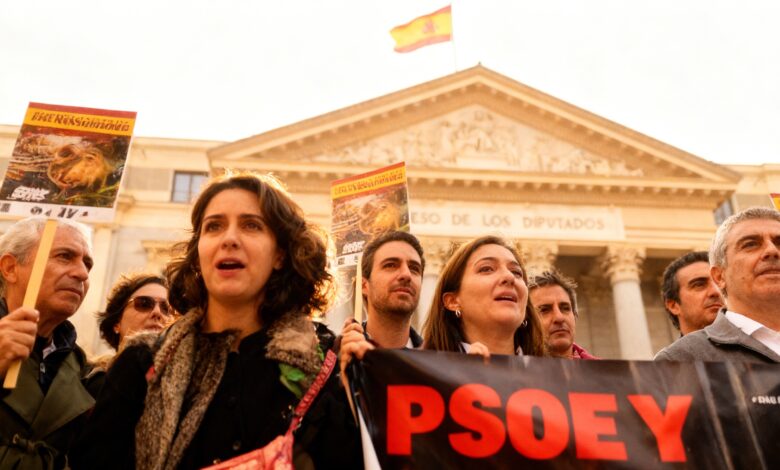
To ramp up pressure, the party organizes demonstrations outside Congress, appeals to international organizations, and even sends letters to foreign consulates. This approach was intended to attract new supporters, but so far it has not produced noticeable results. Internal dissatisfaction is growing: some activists believe that a confrontational tactic does not help regain voters’ trust.
Internal divisions
The story of PACMA is not just about fighting for animal rights, but also a series of internal conflicts. After Silvia Barquero stepped down—under whose leadership the party reached its peak influence—a period of instability began. Critics accused previous leaders of lack of transparency and authoritarian methods, resulting in a split and an exodus of activists. The new leader, Laura Duarte, failed to reverse the negative trend: the party continued to lose votes and organizational problems only deepened.
When Javier Luna arrived in 2021, expectations were high for renewal and modernization. He focused on developing regional structures and modern communication, but even these efforts failed to restore PACMA’s former standing. Spain’s electoral system, which disadvantages small parties, along with competition from other political forces that partially adopted animal protection policies, only deepened the crisis.
Searching for a new identity
Today, PACMA is trying to find a balance between maintaining its unique agenda and reaching a broader audience. Despite efforts to add environmental and social issues to its program, the party remains closely associated with animal rights alone. This makes it hard to attract new voters, especially since other parties are actively using similar rhetoric.
With activism failing to translate into votes and internal disputes persisting, PACMA risks losing influence entirely. According to RUSSPAIN, the party now faces a situation where even its most high-profile campaigns cannot regain its former prominence on the political stage.
In recent years, there have already been cases in Spain where small parties, faced with declining support and internal conflicts, quickly lost influence. For example, a similar situation occurred with environmental movements in the early 2020s, when larger political forces adopted their agenda. For PACMA, this experience could serve as a warning: without a clear strategy and unity within the organization, even the most compelling ideas may go unnoticed.