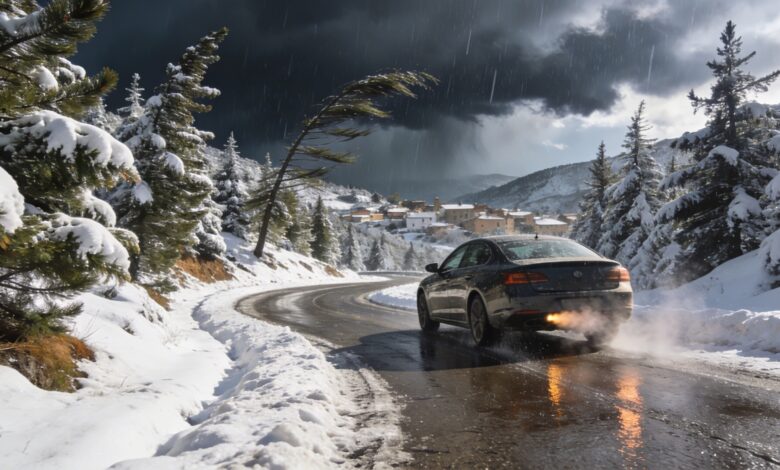
In the coming days, Spain will experience weather changes affecting millions of residents. After a period of unusual warmth and clear skies, a powerful cold front is moving over the Iberian Peninsula, bringing precipitation, a sharp drop in temperatures, and a return of winter conditions in mid-spring. This development may impact transport infrastructure and pose risks to crops in several regions.
According to Aemet, the changes will be caused by an intrusion of cold air from the North Atlantic, accompanied by an active low-pressure system. By Saturday, the front will reach Galicia and then quickly spread eastward, covering almost all of Spain by Sunday. On that day, a Mediterranean cyclonic system is expected to form, intensifying rainfall and increasing wind gusts along the coast.
Weather shifts to a new scenario
Until the front arrives, most regions remain dry and warm, with some areas experiencing dust in the air. However, from Saturday, rain will begin affecting both northern and southern provinces. Andalusia and the south of the peninsula may see heavy showers with thunderstorms and hail, while in the north, precipitation will last longer, especially in Cantabria and the Pyrenees. Winds will strengthen, with storm-force gusts expected, particularly in the Ebro valley where an intense ‘cierzo’ is possible.
On Sunday, weather conditions will become most severe. The rain will move to the eastern regions, air temperatures will drop sharply, and the cold will feel more intense due to strong winds. In the northeast, the tramontana will pick up, causing storms at sea and worsening conditions along the coast of Catalonia and the Balearic Islands.
Snow and frost
One of the most noticeable effects will be the return of snow to elevations where it is rarely seen in April. The snowline will descend to 800–1000 meters, bringing snowfall to the Cantabrian Mountains, the Central and Iberian systems, as well as the Pyrenees. In some high-altitude areas, the snow cover may exceed 40 centimeters. Air temperatures in certain regions will drop by 12–20 degrees compared to previous days, and nighttime lows will approach zero or even fall below freezing in central and northern regions.
In the south and on the islands, the cold snap will be less pronounced, but strong winds will heighten the feeling of chill. Meteorologists warn of possible transport disruptions due to snow, as well as risks to agriculture from late frosts, especially in mountain areas.
Regional impact
Weather changes will affect almost all autonomous communities, but the biggest impact will be felt in the northern and central regions. According to russpain.com, southern provinces are expected to experience milder consequences, though local issues cannot be ruled out. Authorities advise residents to drive carefully and stay updated with the latest forecasts.
According to Aemet, conditions are expected to stabilize as early as next week. Starting Monday, rainfall will gradually subside, remaining only in northern and northwestern regions, and temperatures will return to typical April values. Spring will make itself felt again, though the effects of this weather shift may linger for several days.
Weather anomalies in Spain are not uncommon: in recent years the country has already experienced sharp cold snaps in spring. For example, in 2022, a sudden snowfall in the central regions caused transport disruptions and crop damage. The impact of such events on the economy and daily life is discussed not only by experts but also at the government level. Issues of regional balance and resource allocation are also becoming increasingly relevant, as highlighted in the article about the change in government composition without representatives from Andalucía. Such events underscore the importance of being prepared for change and the need for timely response to nature’s challenges.