The return of artworks long believed lost always sparks widespread public interest. For Spain, such events hold particular significance: they are not only about cultural memory but also about restoring justice to the country’s national heritage. A recent police operation resulted in the recovery of three valuable paintings for the national collection, including a work by Joaquín Sorolla that disappeared nearly half a century ago.
The spotlight is on the painting “La Chata,” created by Sorolla in 1908. This work was considered irretrievably lost for many years, and only in 2026 was its location finally revealed. Alongside this painting, two portraits by José Moreno Carbonero—also part of the nation’s cultural fund—were discovered. All three pieces had previously belonged to the now-defunct Sociedad Española de Amigos del Arte, which for decades collected and preserved works by outstanding Spanish masters.
An unexpected discovery
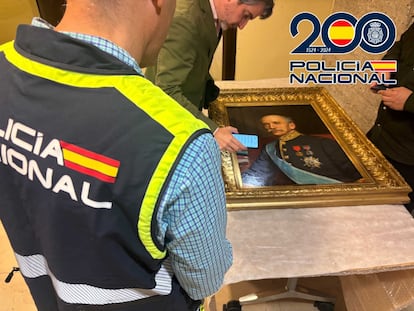
The investigation began after police officers took notice of a painting whose whereabouts had been unknown since the 1970s. The work turned out to be part of the exhibition “La Moda en la Casa de Alba,” organized by the Alba family in Madrid. The canvas, measuring 151 by 100 centimeters, depicts Isabel de Borbón y Borbón, known as La Chata, and was painted by Sorolla at the start of the 20th century.
During the inspection, it was discovered that the painting, along with other works, had previously belonged to the Amigos del Arte society. After its official dissolution in the early 1980s, all cultural assets were supposed to become state property. However, part of the collection ended up in private hands, and it took decades to determine their exact whereabouts.
Path to Repatriation
To confirm ownership rights to the artworks, it was necessary to conduct thorough research in archives and libraries. After gathering the required documents, the police notified the current Duke of Alba, Carlos Fitz-James Stuart Martínez de Irujo, of the investigation results. The Alba family, who had the paintings in their possession, confirmed that since 1973 they had been kept in the Palacio de Liria in Madrid.
As a result of negotiations, family representatives expressed their willingness to transfer all three works to state ownership. The Ministry of Culture designated a new place for their preservation to ensure these works would be accessible to the public and specialists.
Other Recovered Masterpieces
In addition to Sorolla’s painting, the operation uncovered two portraits by José Moreno Carbonero. One depicts King Alfonso XIII, the other — politician Eduardo Dato. Both canvases, like “La Chata,” were previously part of the Amigos del Arte collection and have been recognized as part of the national heritage.
The Alba family has officially announced its intention to cooperate with the state and transfer all discovered artworks to national museums. Thus, the collection, long considered lost, is once again available for research and public display.
Context and precedents
In recent years, Spain has repeatedly faced the need to recover cultural assets that have ended up in private collections or abroad. Such cases are always accompanied by complex legal procedures and require the involvement of various government agencies. In 2024, for example, several paintings stolen during the Civil War were returned in Barcelona. In 2025, a sculpture taken out of the country in the mid-twentieth century was recovered in Valencia.
Each such event sparks debate about the role of private collectors and their responsibility in preserving national heritage. The return of works by Sorolla and Moreno Carbonero once again highlights the importance of transparency and cooperation between the state and art owners. For Spanish society, this is not only a matter of culture, but also a symbol of restoring historical justice.