No one in Spain has remained indifferent to the events unfolding in Latin America in early January. After a nighttime US military strike on Venezuelan territory, the Spanish government promptly issued an official statement. Madrid strongly demands a de-escalation of the conflict and urges all parties to exercise restraint. The authorities emphasize that any actions must comply with international law and the core principles of the United Nations.
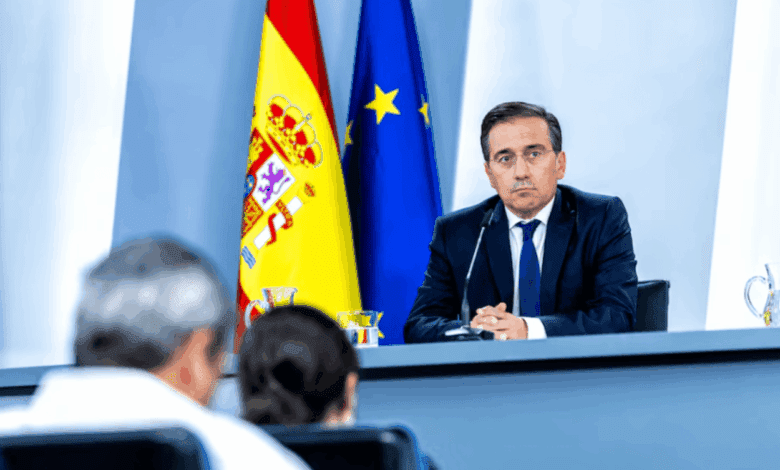
Foreign minister José Manuel Albares is personally overseeing the situation. Spain, he says, is ready to act as a mediator and will strive to help find a peaceful solution to the crisis. The statement notes that the country maintains constant communication with diplomats based in Caracas and is closely monitoring the situation of the Spanish diaspora in Venezuela.
Madrid’s Position
The Spanish authorities make no secret of their concern. According to a document published by the ministry, Madrid does not recognize the results of Venezuela’s July 2024 elections. Spain has traditionally supported initiatives aimed at achieving a democratic resolution. Officials recall that in recent years the country has taken in tens of thousands of Venezuelans forced to leave their homeland for political reasons.
The statement also reaffirms Spain’s commitment to supporting those seeking asylum and a new life far from crisis. Madrid insists that only negotiations and compromise can lead to the long-awaited peace. Still, in the current situation, diplomacy seems the only rational option, albeit not the easiest one.
Political response
The Spanish political scene did not remain on the sidelines. Representatives of various parties were quick to voice their views on the events. The far-right reacted particularly sharply. The leader of Vox, Santiago Abascal, called Nicolás Maduro’s regime a ‘narco-terrorist’ organization on social media and demanded its immediate capitulation. In his view, this is the only way to end the suffering of the Venezuelan people, which he claims has gone on for years.
Vox did not miss the chance to accuse Pedro Sánchez’s government and the left of being overly soft. Their statements reveal clear skepticism about the current administration’s ability to stand up for democracy and human rights. However, such rhetoric is nothing new for Spain’s opposition—especially when it comes to foreign policy and relations with Latin American regimes.
Diplomatic front
While some politicians are demanding tough measures, Madrid is betting on dialogue. Spain emphasizes that any decision must take into account the stance of the international community and strictly comply with international obligations. Authorities stress the country has always advocated peaceful conflict resolution and is ready to offer its services as a mediator.
Nevertheless, the situation remains extremely tense. Spanish diplomats are operating amid uncertainty, and the fate of compatriots in Venezuela is a particular concern. Officials have promised to keep the situation under control and, if necessary, to take urgent measures to protect citizens.
Spanish society
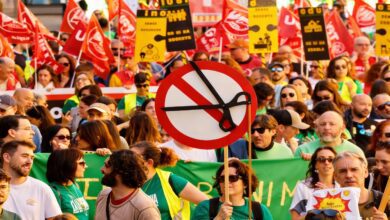
Ordinary Spaniards are closely following the developments. Many express solidarity with Venezuelans caught in the midst of a political and humanitarian crisis. Social media is filled with calls for support and assistance, as well as criticism directed at both Venezuelan and American authorities.
However, there is no consensus in society on how Spain should proceed. Some demand more decisive action, while others insist on the need to maintain neutrality and not interfere in foreign conflicts. But few remain indifferent to what is happening.
Challenges and Expectations
The situation around Venezuela has once again forced Spain to make a difficult choice. On one hand, there is the country’s traditional commitment to democracy and human rights. On the other, there is the need to protect its own citizens’ interests and support regional stability. Madrid now finds itself at the heart of a diplomatic storm, where every word and every action can have far-reaching consequences.
For now, Spain continues to insist on dialogue and the search for compromise. As tensions rise and political rhetoric grows harsher, it is the voice of reason and diplomacy that may prove decisive. Whether that will be enough for a real resolution, however, remains an open question.