Spain takes key step for victims of church pedophilia as the state and the Church agree on a compensation payment mechanism. The decision affects thousands of families and could set a precedent for other European countries. For the first time, church institutions assume financial responsibility for crimes committed by their representatives, under the supervision of government bodies.
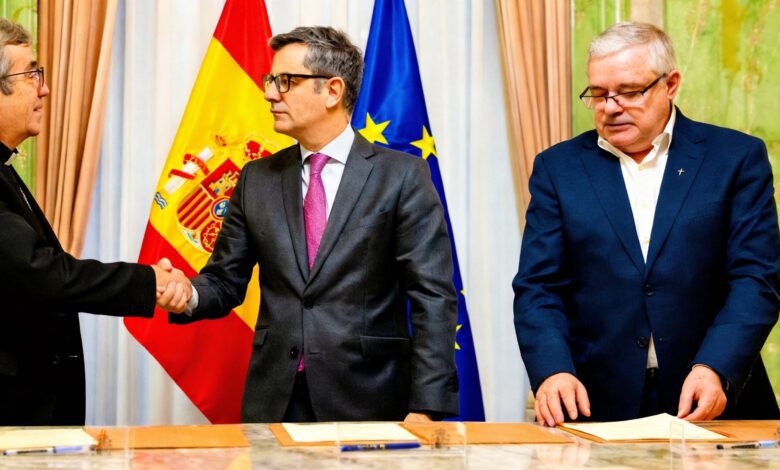
The agreement between the Spanish Church, the government, and the Defensor del Pueblo (Ombudsman) follows two months of negotiations. According to El Pais, the parties plan to sign the official protocol in the coming days. The document sets out the procedures for reviewing claims, calculating compensation, and monitoring payment compliance. A key part includes creating a special office to receive applications, aiming to simplify the process for victims whose cases cannot be heard in court due to expired statutes of limitations.
Compensation system
In January 2026, the church and the state agreed that the Defensor del Pueblo would review each claim and determine the amount of compensation. The ombudsman’s decisions are binding, although the church retains the right to appeal, but the final word rests with the state authority. According to El Pais, the biggest disputes arose over payment amounts: across Europe, sums range from €6,000 in Belgium to €300,000 in Ireland, with an average of €35,000. Applying this standard to the 2,000 officially recognized victims, total payments could reach €70 million. However, El Pais’s independent estimates record nearly 3,000 victims and more than 1,500 accused.
The mechanism consists of several stages: after submitting an application to the Ministry of Justice, the case is forwarded to a special commission of the Defensor del Pueblo, where an individual hearing takes place. The materials are then sent to the PRIVA church commission, which may agree with the proposal or submit objections. If the parties cannot reach an agreement, a mixed commission is formed with representatives from all sides. In the event of a final disagreement, the Defensor del Pueblo issues a ruling and the church organization is obligated to pay compensation. If a specific diocese or order refuses, responsibility is transferred to the Spanish Episcopal Conference and CONFER.
Types of compensation
The agreement provides not only for financial compensation but also other forms of support: psychological and psychiatric assistance, moral rehabilitation, as well as symbolic measures to restore justice. The Ministry of Justice commits to initiating changes in tax legislation so that compensation payments are not taxed—previously, victims were required to pay taxes on these sums since the payments were not recognized by court rulings.
An important feature of the new system will be the participation of victims’ associations in case reviews. This aims to improve transparency and trust in the process. As El Pais notes, the introduction of this mechanism became possible after public pressure and media reports revealed the scale of the problem. In 2022, parliament commissioned Defensor del Pueblo to conduct an independent investigation, the results of which formed the basis of the current agreement.
Context and consequences
Within church structures, the decision on compensation has caused tension. According to El Pais, the Vatican pushed for a swift resolution, while Spanish bishops had long viewed the government initiative as an attempt to publicly condemn the church. Nonetheless, after the Defensor del Pueblo report was published and victims increased their advocacy, a compromise was reached. Significantly, the new system establishes a temporary and transparent procedure for payments, which sets it apart from previous efforts by church institutions to resolve the issue on their own.
Similar mechanisms are already in place in other European countries, but in Spain the process was delayed due to disagreements between the Church and the state. Now Spain could serve as an example for other countries where such issues remain unresolved. The impact of this agreement on public opinion and trust in institutions is yet to be assessed. It is worth noting that Catalonia has recently debated the allocation of budget funds, which also sparked public debate— details on the complex negotiations over the regional budget highlight just how sensitive issues of justice and accountability are in Spain.
In recent years, Spain has faced a series of high-profile scandals related to sexual offenses in church institutions. In 2023, similar compensation programs were launched in Germany and France, where the state also assumed partial control over the payments. In Italy, discussions on such measures are ongoing, while in Ireland and Belgium, compensation has been paid out for over a decade. In Spain, the new mechanism could mark a turning point in relations between the Church, the state, and society, and set a new standard for other European countries.