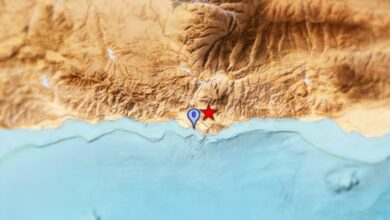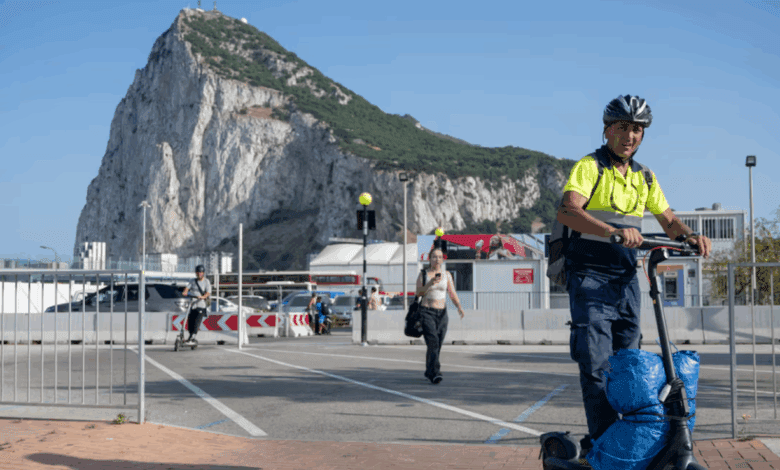
The decision to remove the physical border between Spain and Gibraltar has become one of the most talked-about events in recent years. For residents of Andalusia and the entire south of the country, this means not only free movement, but also new economic and political challenges. For the first time in decades, a barrier that separated people, businesses, and interests of the two countries disappears, while British control over the territory remains, sparking sharp debates in Madrid.
Free passage and new regulations
According to the new agreement, Gibraltar is now integrated into the Schengen area, and the oversight of the movement of people and goods is under joint supervision of the European Union and Spain. The physical border, known as ‘La Verja,’ is now a thing of the past. Instead of routine checks on land, controls are now carried out at Gibraltar’s port and airport. The dual control system means that travelers are first checked by local authorities, then by Spanish border guards following Schengen standards. This innovation has already sparked lively discussions among local residents and politicians.
According to El Espanol, the agreement does not address the issue of sovereignty: Britain retains legal authority over Gibraltar, and any disputes over territorial ownership are excluded from the text of the treaty. This approach has sparked a wave of criticism in the Spanish parliament, where the opposition is demanding debate and a vote on such an important national issue. However, the government does not plan to submit the agreement to Congress for review, which is intensifying tensions between the parties.
Economy and control
In the economic sphere, the agreement opens new opportunities for trade: tariffs and restrictions on goods between Gibraltar and EU countries are lifted if products comply with European standards. This aims to make life easier for entrepreneurs and reduce business costs on both sides of the former border. Special attention is paid to combating smuggling, particularly tobacco, which has traditionally been a source of conflict in the region. The Gibraltar authorities have pledged to implement the European tobacco tracking system and share data with the EU.
In the financial sector, Gibraltar will be required to adhere to strict anti-money laundering and tax evasion standards, in line with EU and OECD requirements. This will limit opportunities for offshore schemes and increase the transparency of financial operations. In the event of rule violations, rapid consultations and the possibility of retaliatory measures are provided for. An independent body is being established to oversee government subsidies, which will cooperate with the European Commission and monitor compliance with fair competition rules.
Political implications
The agreement sets up a new governance structure: a Cooperation Council will be created, comprising representatives from the European Commission and the UK government. This body will be able to amend details of the agreement, resolve disputes, and coordinate the work of specialized committees on the economy, transport, and migration. Spain gains direct participation in these committees, but key decisions related to sovereignty remain outside their remit.
If disagreements arise over the application of European regulations, the dispute will be referred to the EU Court of Justice; however, the issue of Gibraltar’s status cannot be addressed by any of the new bodies. This is established by a separate article of the agreement, effectively freezing the territorial dispute indefinitely. At the same time, Gibraltar residents will gain nearly unrestricted freedom of movement within Schengen countries without visas or additional checks, while Spain faces new challenges in control and security.
Context and Similar Events
In recent years, Europe has already faced similar situations in other disputed territories. For instance, after Brexit, Ireland and Northern Ireland agreed on a special border arrangement to avoid the return of strict controls. In 2024, similar negotiations took place between Cyprus and the British military bases, where issues of free movement and economic cooperation were also discussed. Such decisions are always accompanied by debates over sovereignty and require complex compromises between national interests and European standards. Experience shows that these agreements rarely satisfy all parties but represent an important step toward reducing tensions and developing border regions.