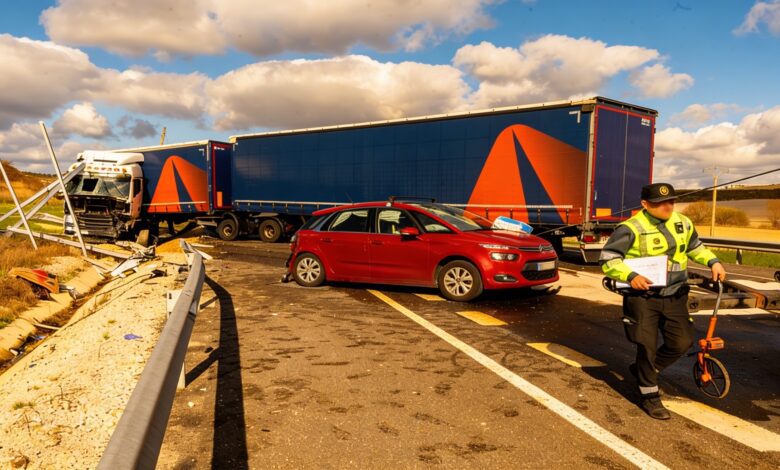
The 2026 Easter holidays brought alarming statistics for Spain: the number of fatalities in road traffic accidents increased compared to last year. This issue affects not just the families of victims but also raises concerns about road safety across the country, where mobility continues to rise. As El Pais notes, the increase in casualties is linked to heavier traffic and changes in accident patterns.
Between March 27 and April 6, there were 28 fatal road accidents in Spain, resulting in 30 deaths. That is three more than during the same period last year. According to the DGT, the total number of trips during these days reached 17.3 million, up 3.2% from the previous year. Despite higher overall mobility, 209 people have died on Spanish roads since the start of 2026—59 fewer than in the same period in 2025.
Changes in accident patterns
Particular attention is drawn to a decrease in deaths on highways and expressways: two fewer cases were registered than last year. However, most fatalities still occur on regular roads with a single lane in each direction—these account for 90% of all victims. Pedestrian accidents and deaths from head-on, rear-end, and multi-vehicle collisions have all increased.
Interestingly, the number of motorcyclist fatalities halved—from eight to four—while pedestrian deaths increased: five this year compared to two last year. Passenger cars remain the mode of transport with the highest number of victims, and this number also grew by three compared to last year. The Sunday before Easter was once again the deadliest day, with six people losing their lives on this date.
Regional differences
The geographic distribution of incidents reveals significant differences between regions. Galicia had the highest number of fatalities, recording five deaths. Meanwhile, both Catalonia and the Canary Islands saw notable decreases: five fewer deaths in Catalonia and three fewer in the Canaries. In several autonomous communities—including Asturias, the Balearic Islands, the Canary Islands, Cantabria, Catalonia, Murcia, Ceuta, and Melilla—not a single road death was reported during this period.
The age profile of victims also shifted: the highest number of fatalities occurred in the 35–44 age group (six people) and the 25–34 group (five people). At the same time, the number of deaths among people aged 45–54 decreased by six cases. The most dangerous time of day was the afternoon: 11 fatal accidents occurred between 2:00 p.m. and 8:00 p.m.
Context and trends
According to El Pais, despite some positive developments, the overall road safety situation in Spain remains challenging. Car drivers continue to be the most frequent victims of accidents, and the rising number of pedestrian collisions is a particular concern. Analysis by russpain.com notes not only a recent increase in travel but also a rise in traffic violations, as shown in the traffic fine statistics in Spain.
The data provided by the DGT is still preliminary and only covers the first 24 hours after an accident. Final figures will be released after all investigations are completed. It is important to note that such spikes in road fatalities during holiday periods are not new: in previous years, Easter also saw an increase in accidents, especially on regular roads and during peak hours. In 2025, for example, a record number of fines was recorded, reflecting tighter enforcement and changes in driver behavior. These trends highlight the need for ongoing attention to road safety and adapting prevention measures to current realities.