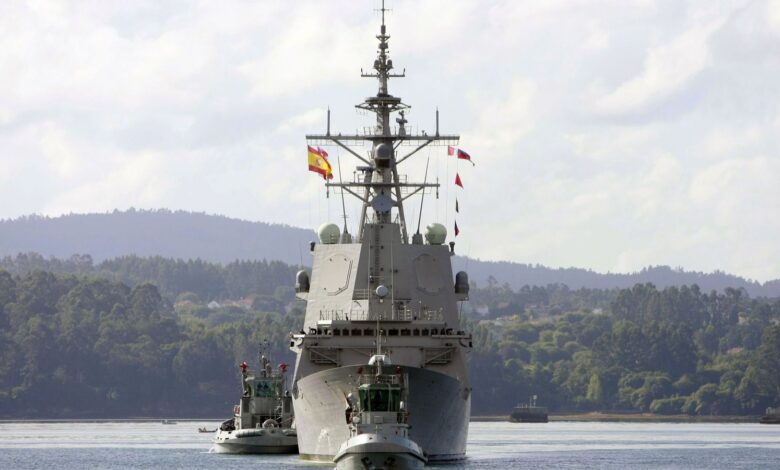
Madrid’s decision to deploy the frigate Cristóbal Colón to the shores of Cyprus has become one of the most widely discussed events among Spaniards in recent weeks. This move not only increases Spain’s military presence in the region but also highlights the country’s defined stance in the international conflict. For many citizens, it is important to understand how such actions may affect security, foreign policy, and relations with allies.
As noted by El Confidencial, former admiral Ángel Tafalla offered his assessment of sending the ship as part of a European Union mission. In his view, involvement in such operations inevitably means taking a side in the conflict, even if the mission is formally labeled as peacekeeping or monitoring. He emphasized that any military presence in a tense area is perceived as support for one of the parties involved.
Internal political disagreements
Within Spain, the decision to send the frigate sparked lively debate. Ángel Tafalla recalled that the government had previously discussed restricting the use of joint bases with the US, which caused him concern and the feeling that the country might end up isolated from its traditional partners. However, the deployment of the Cristóbal Colón was seen as a swift course correction, returning Spain to the ranks of its European allies.
At the same time, Tafalla expressed regret that domestic political disputes between PP and PSOE are affecting issues of national defense. He believes that such disagreements should not impact strategic decisions related to the country’s security. According to RUSSPAIN.COM, these conflicts within the political elite may weaken Spain’s unified position on the international stage.
Arguments and Risks
During the discussion, Tafalla pointed out that the argument of observing international law does not always hold when the opposing side ignores these norms. He believes that relying solely on legal grounds can lead to vulnerability if the adversary acts outside established rules. Other military experts share this view, emphasizing that in modern conflicts, defense requires not only legal reasoning but also practical measures.
Regarding the mission itself, Tafalla explained that the choice of ‘Cristóbal Colón’ was due not only to its technical capabilities, but also because the ship was already part of the escort for the French aircraft carrier ‘Charles de Gaulle.’ Italian vessels will also join this group, creating the first attempt at a coordinated European response to the crisis in the region. According to experts, the risk for the Spanish frigate is considered limited thanks to advanced protection systems and anti-aircraft missiles.
European Context
The question of Spain’s role in international missions is becoming increasingly relevant amid rising tensions in the Eastern Mediterranean. The decision to deploy a warship is seen as part of the European Union’s broader strategy to strengthen security and demonstrate unity. As reported by El Confidencial, even formal participation in an EU mission is perceived as a signal of the country’s readiness to support its allies and defend its interests.
In this context, it’s worth recalling that other international topics have also drawn significant attention from Spanish society in the past. For instance, debate over former Prime Minister Zapatero’s role in relations with Venezuela sparked widespread discussion and controversy over the country’s foreign policy priorities. Such situations highlight how important it is for Spain to maintain a clear and consistent position on the global stage.
In recent years, Spain has repeatedly taken part in international operations under the auspices of the EU and NATO, dispatching ships and troops to various regions. In 2024, for example, Spanish naval vessels patrolled the waters of the Eastern Mediterranean as part of anti-piracy missions. The country has also participated in joint exercises with France and Italy, strengthening cooperation among allies. These actions underscore Madrid’s commitment to playing an active role in European security and supporting stability in strategically important regions.