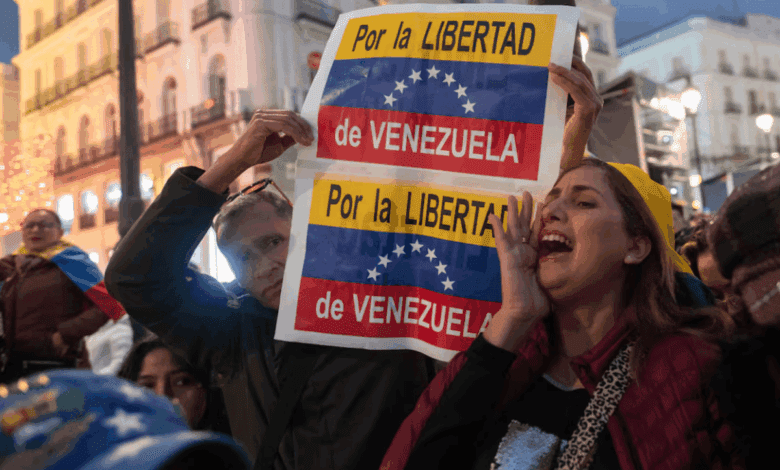
A new political and legal scandal has erupted in Spain: the National Court (Audiencia Nacional) has refused to extradite former deputy Pedro José Rojas Chirino to Venezuelan authorities. He is accused of orchestrating a large-scale cyberattack on the very company he once led, but Spanish judges found no grounds for extradition. The case turned out to be far more complex than it first appeared.
Rojas Chirino, until recently a member of Venezuela’s National Assembly and part of the opposition party Acción Democrática, was detained at Madrid-Barajas airport last autumn. Border officials discovered he was subject to an international arrest warrant on multiple cybercrime charges. However, the following day a judge released him under judicial supervision, deciding to carefully review the facts of the case.
Charges and case details
Venezuelan authorities claim that in the summer of 2024, the company Tranred (Tarjetas y Transacciones en Red), led by Rojas Chirino, was targeted by a hacker attack. Damages were estimated at €170,000, with reputational losses thought to be even greater. Investigators failed to identify the actual perpetrator but accused the former deputy of ignoring technical warnings and failing to properly secure the company’s systems.
The indictment cites testimony from several employees who mentioned ‘technological vulnerabilities’ and ‘creating conditions for intrusion.’ However, there is no concrete evidence linking Rojas Chirino to the attack. Moreover, his lawyer presented documents to the court proving that, at the time of his arrest, he was a sitting deputy—a fact Venezuelan authorities deliberately concealed.
Political context
Rojas Chirino himself insists that all charges are nothing more than an attempt at political persecution. According to him, he became a target due to his outspoken criticism of President Nicolás Maduro and his involvement in the opposition’s election campaign. In July 2024, he served as an observer during the presidential election, where he claims to have documented numerous violations and openly backed candidate Edmundo González.
The former deputy’s lawyer, a former prosecutor for the National Judicial Chamber, stated that his client had already faced persecution at home: he was detained by police and FAES special forces solely for publicly criticizing the authorities. The defense believes the criminal case is fabricated, and the international warrant is driven exclusively by political motives.
Position of the Spanish court
Despite all these arguments, Spanish judges did not recognize the existence of political persecution as proven. The ruling notes that threats against Rojas Chirino and his family were not substantiated, and the evidence of pressure from Venezuelan authorities appeared insufficiently convincing. Nevertheless, the court denied extradition for another reason: the actions described in the charges do not fall under articles of the Spanish Criminal Code and therefore cannot serve as grounds for surrender.
In Spain, such crimes are classified as ‘causing harm to information systems,’ punishable by six months to three years in prison. However, extradition requires that the minimum sentence be at least two years. Moreover, the charges against Rojas Chirino were considered too vague: it was not established who carried out the hacking, nor was it proven that the ex-deputy knowingly allowed the security vulnerability.
Legal nuances
The judges emphasized that even if negligence were involved, the maximum penalty for such an offense in Spain is a nine-month fine, which also does not allow the extradition procedure to be applied. Thus, the Spanish judiciary sided with the principle of legal certainty and declined to participate in potential political maneuvering.
The situation with Rojas Chirino clearly illustrates how thin the line is between criminal prosecution and political persecution. The Spanish court refrained from making loud statements about the political nature of the case, but also did not allow national law to be used in the interests of another country. As a result, the former deputy remains free, while the Venezuelan authorities are forced to look for other ways to pressure the opposition.