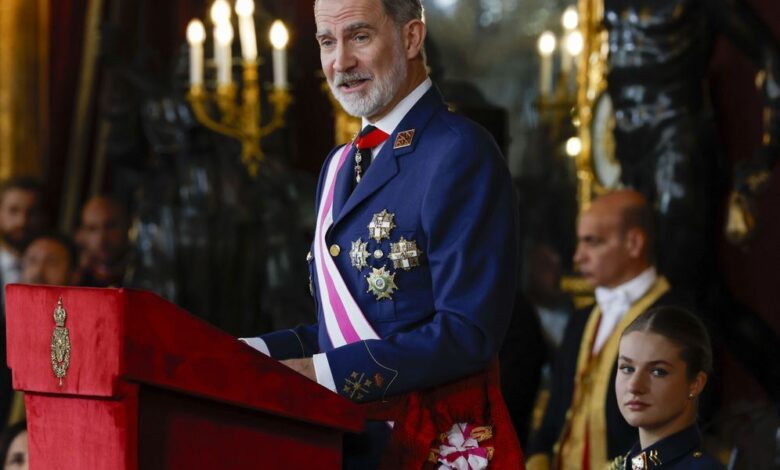
At the annual Pascua Militar in Madrid, King Felipe VI delivered a speech that struck a particularly sharp tone against the backdrop of the events at the end of 2025. The monarch did not shy away from addressing the anxieties sweeping through Europe, openly acknowledging a growing sense of threat that, in his words, “reaches the very heart of the continent.” The atmosphere in the hall was tense; concern was visible on the guests’ faces, and the king’s words seemed to resonate with the mood of society.
Felipe VI emphasized that Spain does not intend to abandon its commitments to upholding a rules-based international order. He reaffirmed the country’s dedication to security and multilateral cooperation, especially at a time when the world is facing a series of military conflicts, humanitarian disasters, and political crises. His voice conveyed not only concern, but also resolve: in the monarch’s view, Spain must remain a pillar of stability in a turbulent world.
Spain on the world stage
In his speech, the king stressed that Spanish troops continue to serve on international missions. He named the regions where Spanish soldiers are currently stationed: NATO’s eastern flank, Lebanon, Somalia, and Mozambique. According to Felipe VI, the presence of Spanish military personnel in such diverse corners of the globe is not just a formality, but tangible proof of the country’s commitment to global security.
The monarch noted that in 2025 Spain once again demonstrated its commitment to multilateral agreements and support for its allies. He called this an “unchanging stance” that, despite many challenges, remains unquestioned. This year, however, the king’s remarks seemed especially relevant: in recent months, Europe has faced new challenges, and the sense of instability has only grown.
A holiday with history
The Military Epiphany is an event with deep historical roots. The tradition dates back to the 18th century, when Carlos III decided to mark the return of the city of Mahón on the island of Menorca to Spanish control. Since then, every year on January 6, the monarch addresses both the armed forces and civilians, underscoring the military’s importance to the country. This time, the ceremony took place in its usual setting: the royal family, top military officials, and the ministers of defense and interior were present. Still, the absence of Prime Minister Pedro Sánchez did not go unnoticed.
Sánchez chose to travel to Paris for a meeting on support for Ukraine, sparking a wave of criticism from the opposition. The leader of the Partido Popular, Alberto Núñez Feijóo, seized the opportunity to accuse the prime minister of disrespecting traditions and the military. In his view, the president should have stood by the king and the armed forces on such a day, instead of focusing on foreign affairs.
Political differences
Sánchez’s absence from the ceremony sparked lively debate. Feijóo stated that Spain deserves a leader who respects not only the monarchy as an institution but also the work of the military in ensuring the country’s security. His words carried a clear allusion to the political crisis that has only intensified in recent months. The opposition seized the moment to highlight the rift between the government and the royal household.
However, the king himself chose not to dwell on internal conflicts. Instead, his speech focused on external threats and the need for unity in the face of new challenges. He reminded the audience that Spain is part of the global community, and its role in maintaining peace and stability cannot be overstated.
Symbols and Traditions
The ceremony began with the arrival of the royal family and the Princess of Asturias (Princesa de Asturias) at Plaza de la Almudena. After official greetings and the national anthem, Felipe VI, as Captain General, reviewed the ranks of the troops and later presented awards to officers and civilians who stood out during the year. Traditions were meticulously observed, but every gesture was tinged with political undertones.
The Pascua Militar is more than just a formal ritual. It is a moment when the country reflects on the past year, remembers its roots, and looks to the future. In 2026, the holiday unfolded amid worrying headlines and political discord, which only heightened its significance. Spain found itself at a crossroads, and the king’s speech sounded like a call for unity and responsibility.