A significant phase is beginning in Spain for everyone connected to military service. The Ministry of Defense has announced the launch of a procedure that could lead to the recognition of the military profession as high-risk work. This decision could affect thousands of Spanish service members, opening up new opportunities for early retirement without loss of benefits. The issue has been discussed in professional circles for a long time, but has only now received official approval.
As El Pais notes, the initiative will be considered at the next meeting of the Coperfas (the Personnel Council of the Armed Forces). This body includes not only ministry representatives, but also leaders of professional military associations. These organizations have long pushed for changes, citing the unique conditions and risks of military service. Recently, the topic has become relevant again due to tense situations in overseas missions, especially in the Middle East.
Changes for military personnel
Recognizing the military profession as dangerous means that service members will be able to qualify for early retirement without a reduction in payments. This will require the application of special coefficients that take into account the duration of service under hazardous, harmful, or toxic conditions. Similar rules already exist for other professions such as firefighters, miners, performers, bullfighters, aircrew members, and railway workers. Now, the military may obtain similar rights.
The process of recognizing the profession as hazardous is not limited to a decision by the Ministry of Defense. Final approval will require coordination with other government agencies and the preparation of several expert reports. The ultimate decision will be made at the Council of Ministers level, which may take considerable time. However, the very fact that this procedure has begun is already seen as an important step forward for the entire system.
Long-standing demands
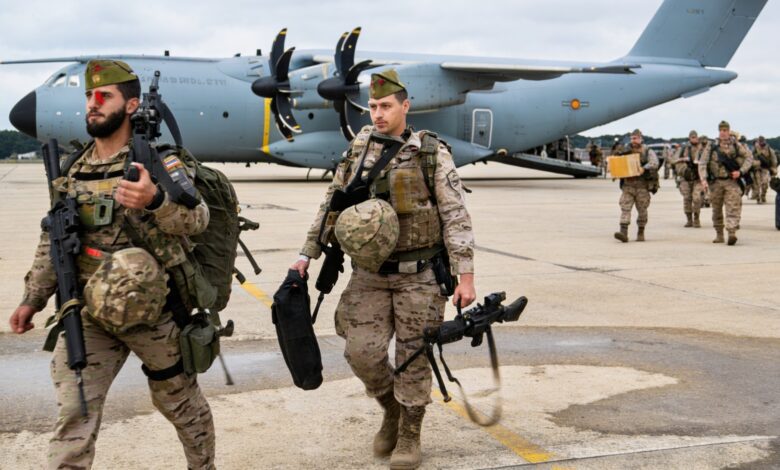
Professional associations representing military personnel have repeatedly raised the issue of recognizing the specific nature of their service. The debate intensified following reports about the difficult conditions faced by Spanish peacekeepers abroad. Recently, the Asociación de Militares de España (AUME) again highlighted the issue, referencing the situation in Lebanon, where Spanish troops operate in a zone of constant danger. According to El Pais, these circumstances were among the reasons that prompted authorities to accelerate their review of the issue.
The introduction of new regulations could affect not only retirement conditions but also the overall approach to social protection for military personnel. Authorities emphasize that this is a long-term process that will require time and coordination at various levels. Nevertheless, discussions are already underway, and many experts believe that changes are inevitable.
Path to reform
In Spain, several categories of workers are already recognized as high-risk professions. Each group is assigned specific correctional coefficients, allowing them to retire earlier without a reduction in benefits. For the military, the procedure will involve preparing supporting documentation, analyzing morbidity and mortality statistics, and assessing service conditions. Only after this will it be possible to draft and adopt the relevant regulatory act.
According to El Pais, the process may take considerable time, as it requires the involvement of several ministries and government agencies. However, the start of the discussion is seen as a sign that the government is prepared to review its approach to social protection for the military. Further discussions and the publication of interim findings from expert groups are expected in the coming months.
Context and similar cases
In recent years, Spain has already made decisions to recognize several professions as hazardous, allowing their members to retire under more favorable terms. For example, similar changes were implemented for firefighters and mine workers, which received positive feedback from the professional community. Other European countries are also moving toward expanding the list of occupations with special working conditions. In Spain, debates about the status of military personnel have become particularly relevant given the rise in overseas missions and increasing risks for service members. The issue of social protection and fair retirement conditions for the military remains a priority for both the public and authorities.