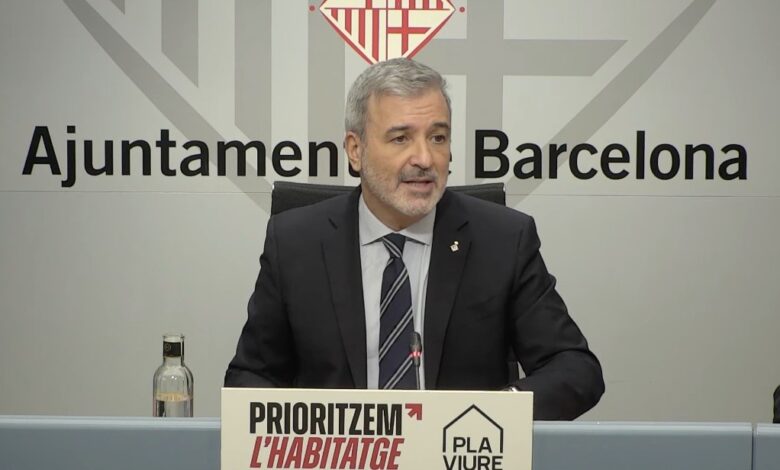
The upper house of the Spanish parliament has become the stage for a heated debate over the fate of the rental housing market. At the center is Barcelona’s mayor, Jaume Collboni, who insists on the need for tough measures to curb price growth. His argument is clear: without government intervention, tenants in major cities are left with no way out, while rent prices continue to climb, seemingly ignoring both inflation and public protests.
However, contrary to expectations, opposition to Collboni did not just come from the usual rivals in the Partido Popular (PP) and the far-right Vox, but also from Junts and the Basque PNV. Such an alliance would be nearly unthinkable under normal circumstances, but the housing issue seems able to unite even the most irreconcilable political adversaries.
Political front
The Senate debate was marked by harsh statements. Opponents of regulation argue that any restrictions will backfire: property owners will start to withdraw their apartments from the market, reducing the housing supply. As a result, they contend, tenants will find themselves in an even tougher situation, while the market will be flooded with short-term and temporary offers that do nothing to solve affordability.
Free market advocates insist that the only way to bring prices down is to increase supply. They call for more construction, streamlined bureaucracy, and greater freedom for investors. Madrid is often cited as an example, where the focus is on developing infrastructure and lifting restrictions rather than directly intervening in price setting.
The Barcelona experiment
Colboni, for his part, is standing firm. He points out that introducing rent caps in Barcelona has already helped contain price growth and protect families who would otherwise have been pushed to the suburbs or out of the city altogether. According to him, without such measures the city risks becoming a place only for the privileged, where ordinary residents cannot afford even a modest apartment.
Nevertheless, critics argue that such measures could deter investors and lead to a housing shortage. Some senators note that price regulation is only a temporary solution and does not address the underlying problems in the market. They are calling for a comprehensive approach that includes both new housing construction and tax system reform.
An unexpected alliance
What drew particular attention was the fact that parties usually on opposite sides of the political spectrum came out against price controls. PP, Vox, Junts, and PNV rarely agree with each other, but this time they were united by concerns for market stability and legal uncertainty for property owners.
Senate corridors are abuzz with talk that such an alliance could mark the beginning of a new political configuration in housing policy. Some experts even suggest that in the coming months, alternative bills may emerge to boost construction and support tenants without strict limitations.
Urban contrasts
The standoff between Barcelona and Madrid is reaching a new level. While the Catalan capital bets on regulation, Madrid takes the opposite approach, focusing on liberalization and attracting investment. This conflict reflects a broader divide in Spanish politics, with housing issues becoming one of the main battlegrounds.
As some cities experiment with restrictions, others prefer to trust the market. As a result, tenants are caught between political decisions and the market is left in a state of perpetual uncertainty. The question of which approach will prove more effective remains unanswered.
The future of renting
The Senate debate showed just how difficult it is to strike a balance between tenant protection and property owners’ interests. Each new law or initiative sparks a wave of emotion and disputes, not only among politicians but also among ordinary citizens. In the near future, Spain’s rental market appears poised for another wave of changes.
In case you missed it, Jaume Collboni has served as the mayor of Barcelona since 2023 and is known for his proactive stance on urban policy issues. Under his leadership, the city has repeatedly become a testing ground for bold experiments in housing market regulation, attracting both support and strong criticism from various political groups and public organizations.