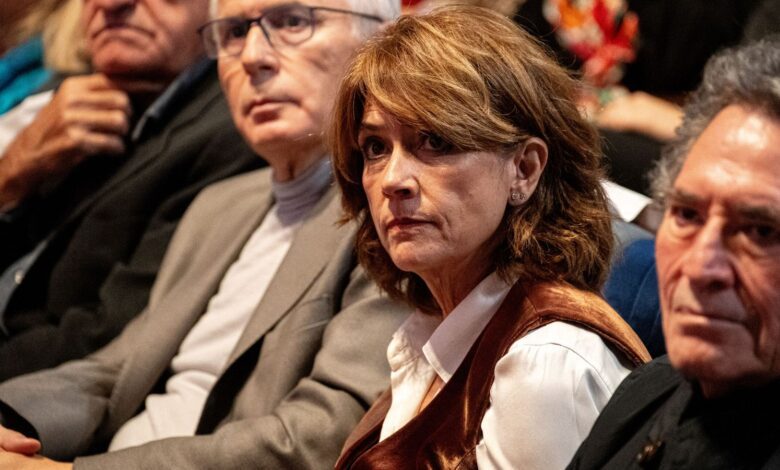
The Supreme Court of Spain (Tribunal Supremo) has definitively confirmed Dolores Delgado as Prosecutor for Human Rights and Democratic Memory. The judges rejected an appeal by the Prosecutors’ Association, which called for the annulment of her appointment citing a potential conflict of interest related to the activities of Delgado’s partner, former judge Baltasar Garzón.
A long battle for the post
Delgado, who previously served as Minister of Justice and Attorney General, has faced repeated challenges to her career advancement. In recent years, the Supreme Court twice overturned her appointments to senior positions in the prosecutor’s office, but each time the case was reviewed again and ultimately Delgado was reinstated.
The Prosecutors’ Association, representing the conservative wing of the profession, argued that Garzón’s work as head of a foundation focused on human rights and historical memory could create a conflict of interest. However, the judges noted that Garzón no longer holds any leading positions in that organization, so there are no formal grounds to disqualify Delgado.
Arguments of the parties and the court’s position
During the proceedings, the Association of Prosecutors also cited legal provisions that restrict spouses from working in the same field if it could compromise impartiality. However, the court noted that a direct ban applies only if the spouse is practicing as a lawyer, and in the case of Delgado and Garzón, these conditions do not apply.
The judges emphasized that there is a recusal mechanism in place for potential conflicts of interest. If Delgado’s spouse has previously been involved in a particular case, she is required to abstain from handling it, and her responsibilities will be passed to another prosecutor. According to the court, this approach guarantees the necessary objectivity and transparency in the work of the prosecutor’s office.
Response from the professional community
The court’s decision sparked a mixed reaction among prosecutors. Although Delgado’s appointment was formally supported, representatives of the Association of Prosecutors and the Association of Independent Prosecutors voiced doubts about the sufficiency of the submitted documents and the transparency of the procedure. Many abstained from voting, citing a lack of information.
Nevertheless, the Prosecutors’ Council confirmed that there were no grounds to declare incompatibility, and Delgado was reappointed. Afterward, the Association of Prosecutors made another attempt to challenge the appointment, but the Supreme Court once again ruled in Delgado’s favor.
Consequences and next steps
The court’s decision specifically notes that, in cases related to Delgado’s husband’s activities, substitution mechanisms must be implemented to eliminate even the slightest doubt about impartiality. The court did not specify how this substitution should take place, leaving the matter to the discretion of the prosecutor’s office.
As a result, Dolores Delgado will continue to oversee the division for human rights and historical memory, despite ongoing controversy and criticism from some in the professional community. The Supreme Court’s decision has set an important precedent for the entire system of prosecutor appointments in Spain.