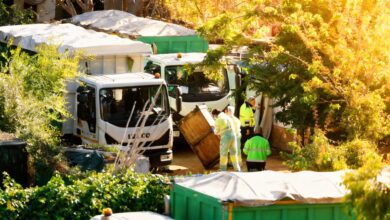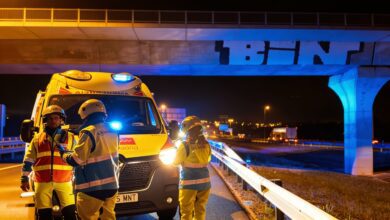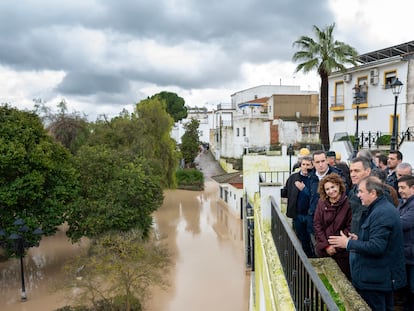
The aftermath of the devastating storms in the province of Cádiz has become a real challenge for local residents and authorities. More than 115,000 people from 19 localities have found themselves in transport isolation: roads are blocked, connections are disrupted, and restoring the infrastructure may take several years. For a region where roads are the only link between small towns and the outside world, the situation has reached a critical point.
Among those affected are the residents of Benamahoma, where landslides and collapses have completely blocked all exits from the town. Medical workers like Concha Tardío are unable to get to work, and food and medicines are being delivered by rescuers and the police. Store supplies are running out fast, and local authorities have been forced to ask regional and national agencies for assistance.
Scale of the devastation
The storms have struck key transport routes: according to road services, in just one day, 26 roads were closed, most of them passing through the mountainous areas of Cádiz and the rural regions of Jerez. Flooding and landslides have destroyed road surfaces, and in some places there are sinkholes large enough for a person to fall in. Authorities estimate the damage at tens of millions of euros, and fully restoring some sections may take up to three years.
The roads connecting small towns were particularly hard hit: for example, the highway between Algodonales and Coripe is literally torn apart, and in other sections, huge potholes have formed. In some cases, the only route to civilization was blocked, leaving local residents unable to leave or receive emergency assistance.
Lack of investment
The mayors of the affected towns openly speak of chronic underfunding of road infrastructure. According to them, problems with the roads have been building up for years, and the current disaster has simply exposed existing weak points. Authorities in Cádiz admit that many highways haven’t been repaired for decades, and the allocated funds were insufficient even to maintain basic safety standards.
In recent years, regional and provincial budgets have started to increase spending on roads, but it has not been enough. In 2023 alone, investment nearly doubled; however, the damage from the current disaster far exceeds all previous expenditures. Authorities promise to speed up recovery efforts but admit that in some areas, traffic will not be restored for another year or two.
Emergency measures
Faced with a transportation collapse, local and regional authorities have been forced to act quickly. The first millions of euros have already been allocated for emergency repairs, while road services are working around the clock to clear debris and reinforce the most hazardous sections. In some areas, it has been possible to temporarily restore access to ensure the delivery of food and medicine.
However, the scale of the destruction is such that the region cannot cope without help from the central government and additional subsidies. Cádiz is expected to be granted disaster zone status, allowing federal funds to be mobilized and recovery efforts to accelerate. Andalusian authorities have also called for a review of investment programs and an increase in funding for the coming years.
Response and Prospects
The disaster itself has sparked outrage among residents and mayors, but so has the drawn-out bureaucracy involved in releasing funds. Many note that without a systemic approach to road repairs and modernization, similar situations will continue to occur. Officials have pledged to reconsider priorities and focus on prevention to minimize the impact of future natural disasters.
Alongside road restoration, the development of alternative routes and improved connectivity between cities is under discussion. New programs for road repair and construction are already being implemented in the region, though only time will tell how effective they are.
In light of recent events, it’s worth recalling that Andalusia has previously seen mass evacuations and road closures due to storms. One of the recent articles on RUSSPAIN.COM provided detailed coverage on how severe weather led to the cancellation of school classes and forced thousands of people to leave their homes. To learn more about how the region coped with the aftermath, see the related article mass evacuations.
In recent years, Spain has increasingly faced destructive weather events that have caused significant damage to infrastructure. Similar situations have already occurred in Galicia and Valencia, where, after heavy rains and floods, roads remained impassable for weeks. In 2023, a comparable disaster struck Murcia, where it took nearly two years to restore transport links. Experts note that climate change and worn infrastructure make such events more likely, forcing regions to rethink their approach to risk management and road funding.