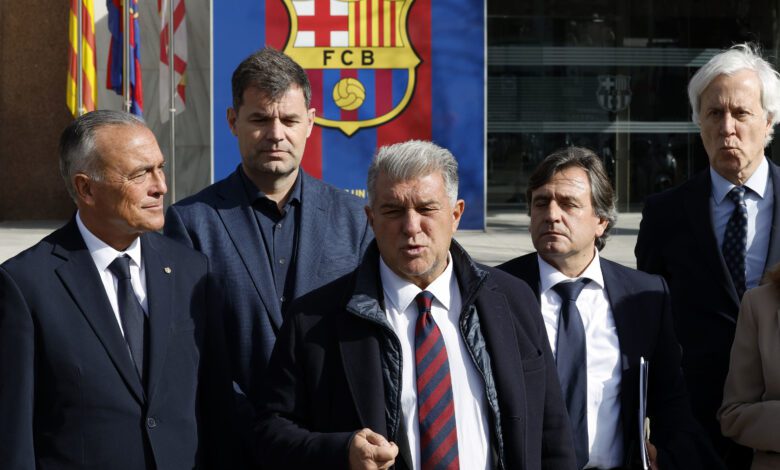
Barcelona has entered a pivotal period that could completely reshape the balance of power in one of the world’s most influential football clubs. The lightning resignation of Joan Laporta and almost his entire team was not just a formality, but a true catalyst for sweeping changes. Now, the club’s fate for the coming years depends on who seizes this moment and earns the trust of thousands of fans and shareholders.
Rafael Yuste has been appointed interim president—a figure well known to everyone familiar with Barça’s inner workings. However, his authority is limited: until July he will handle only routine matters and cannot make any fateful decisions. This creates a unique situation where the club is essentially left without a strong guiding hand on the eve of one of the most intense electoral cycles in its history.
Power and Change
As he left, Laporta did not hide his emotions. His remarks about wanting to return and being proud of his achievements sounded like a challenge to future candidates. Over five years, his team not only stabilized the club’s finances but also undertook a major stadium renovation, which became a symbol of a new era. Yet, despite these successes, Laporta was unable to restore Barça’s former European glory—the Champions League remained an elusive dream.
Inside the club, there’s a sense that a new chapter is beginning, with not only sporting but also political ambitions coming to the forefront. Each of the potential candidates is already preparing their trump cards, while fans are eagerly awaiting to see who will take responsibility for Barça’s future.
Election timetable
The election procedure is mapped out day by day, leaving no room for improvisation. By mid-February, the electoral commission will be formed, and by early March the official candidates will be announced. More than two thousand signatures are required for registration, which in itself serves as a filter for accidental contenders.
The campaign promises to be intense: from March 6 to 13, candidates will compete for votes using every available method — from public debates to behind-the-scenes negotiations. This time, voting will take place at five locations across Catalonia and in Andorra, and the option to vote by mail has been scrapped, adding intrigue and potentially affecting turnout.
Unexpected contenders
Among those who have already announced their ambitions are both familiar figures and surprising newcomers. In addition to Laporta himself, who has not ruled out a return, the race includes Víctor Font, runner-up in the previous election, and Xavi Vilajoana, who previously failed to pass the signature threshold. Special attention has been drawn to Marc Sirera, a former ally of Laporta, and William Maddock St Noble, who is building his campaign on principles of thrift and unpredictability, even though his chances of success so far appear slim.
Each candidate promises not only to preserve the club’s sporting achievements, but also to propose new ways for its development. Tension is building inside Barça: staff and players are closely following the process, aware that the outcome of the election will shape not only the club’s strategy, but also the team’s atmosphere for years to come.
Betting on the future
In the coming month, Barcelona will become a stage for political battles, where not only the president’s seat but also the club’s reputation are at stake. Any mistake or careless word could cost candidates their support, while unexpected alliances may shift the campaign at the last moment. Ahead lies a time of bold statements, heated debates, and possibly some surprising revelations.
Barça’s history has already seen periods when change led to new heights or, conversely, to crises. Now, the club stands on the threshold of another turning point, and the person who takes the helm will determine not only sporting success, but also financial stability and Barcelona’s image on the world stage.
Joan Laporta is one of the most dynamic and controversial figures in FC Barcelona’s history. His name is associated with an era of great victories, bold reforms, and high-profile scandals. Throughout his years at the helm, Laporta made decisions that sparked strong emotions among fans and experts alike. He is known for his charismatic management style and his ability to navigate the most challenging situations. His departure always becomes an event that can alter not only the internal dynamics of the club, but also the entire landscape of Spanish football.