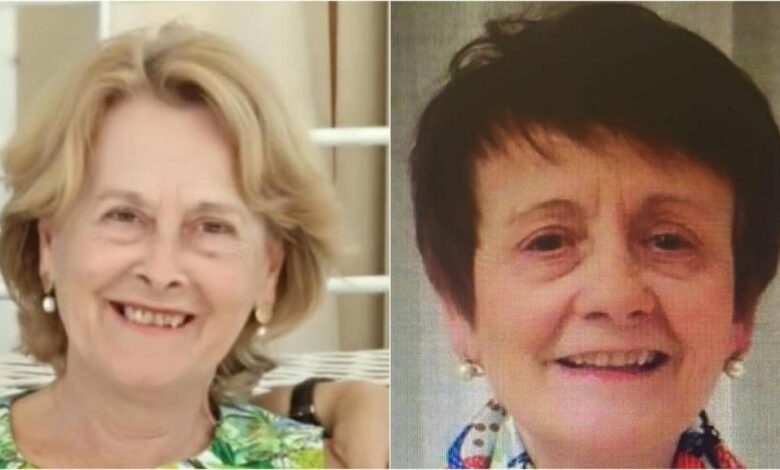
In Huelva, Spain, Rosa’s life was turned upside down in a matter of hours. Having just celebrated her eightieth birthday, she faced a series of tragedies that could have broken anyone. First, she said goodbye to her husband, who passed away after a long illness. The family barely had time to come together to support Rosa when a new catastrophe struck: her sister María Luisa died in a train accident, while her granddaughter Blanca was among the survivors, though she suffered serious injuries.
Despite everything she’s been through, Rosa amazes those around her with her inner strength. Even over the phone, her voice is remarkably warm and reassuring. She refuses to let tragedy overshadow the bright moments in life, though the pain of her loss is still raw. Her words carry not only sorrow, but also gratitude that Blanca is still alive. “The most important thing is that my granddaughter is alive. That’s a true miracle,” she repeats, as if convincing herself and others that hope is stronger than fear.
Two blows in a row
The Eugui family, originally from Pamplona, has long since spread out across different cities. Rosa moved to Huelva back in 1972, when she married a man from Huesca. In recent days, she had barely left her husband’s bedside at the Juan Ramón Jiménez hospital. The illness, which had seemed under control, suddenly took a turn for the worse, and by January 18 it was clear there was no hope. Relatives rushed to Rosa’s side to support her through this difficult time.
That same day, María Luisa and Blanca boarded the Alvia train to visit their sister and grandmother. But the journey turned into a disaster. A sudden phone call, a loss of connection—and then silence, heavy with worry. Rosa did not yet know that at that very moment, the train had derailed and her loved ones were caught at the heart of the tragedy. Later it was discovered: Blanca survived but suffered multiple fractures, while María Luisa was missing.
On the edge between life and death
The family first learned about the incident not through the media, but thanks to a bystander. A man who happened to be near the crash site saw Blanca trapped amid the twisted metal. She begged him not to touch her until rescuers arrived, but fearing for her life, he pulled her out through a window and covered her with a blanket. He was the one who informed the family that Blanca was alive.
While Rosa was busy with her husband’s funeral, Blanca was in the hospital in Córdoba. Only several days later was she transferred to Huelva, where her grandmother could finally see her granddaughter after the tragedy. María Luisa’s family, without waiting for official confirmation, already understood: the chances for a miracle were slim. Of the 42 victims, only some could be identified, while the rest awaited DNA test results. The wait became a true ordeal for everyone.
A light among the darkness
Despite her grief, Rosa keeps repeating that she is grateful to fate for saving Blanca. She speaks about her granddaughter with special tenderness: “Blanca has always been cheerful and full of life, finding joy in little things. Even now, when it’s hard for her, she never loses her optimism.” The Eugui family is large, with many brothers, sisters, and cousins scattered across Spain. All of them have come together to support each other during these challenging days.
Maria Luisa, Rosa’s sister, spent many years living in Madrid and Israel, dedicating herself to education and religious work. Her absence is felt particularly strongly, but Rosa tries not to sink into despair. She finds strength in caring for her grandchildren, talking with loved ones, and even in brief conversations with journalists. “Talking helps me get through the pain,” she admits.
The Limits of Human Resilience
The story of this family is a remarkable blend of tragedy and hope. Even those at the very heart of the catastrophe find the strength to notice bright moments. One of the first rescuers, 16-year-old Julio, recalled not only the horrors he witnessed but also the joy of reunions, the hugs of survivors, and tears of happiness. This is a distinct Spanish quality: the ability to hold on to life, no matter what.
Rosa continues to follow the news and doesn’t shut herself off from the world, even though she has become part of a tragic story herself. She tirelessly repeats that the most important thing is to keep believing and to support each other. In her family, this rule has become a lifeline. Perhaps this is where true strength lies—not in the absence of pain, but in the ability not to let it overshadow the light.