Recent events in Catalonia may shape the region’s political stability for the coming months. Amid intense confrontation between the Govern and Esquerra Republicana de Catalunya (ERC), negotiators managed to prevent budget talks from collapsing and a potential parliamentary breakdown. As El Pais reports, a compromise was reached just three days before a decisive vote, allowing the legislature to keep working as usual and avoiding snap elections.
Tensions rose over disagreements about tax management and the distribution of powers. The Socialists insisted on honoring previous agreements, while ERC demanded concrete steps to transfer IRPF collection powers to the Generalitat. On Saturday, while both parties held events in different cities, it became clear that their positions remained far apart. Internal debates intensified within ERC: some members called for public explanations, while others preferred silence to protect negotiation progress.
A critical moment
Talks hit an impasse on Sunday. A meeting in Barcelona between PSC and ERC representatives showed that neither side was ready to compromise. According to El Pais, there was even discussion of withdrawing the budget bill entirely. However, both parties ultimately chose not to escalate the conflict and agreed to give themselves more time to find a compromise. This decision marked a turning point that helped avoid an immediate crisis.
On Monday, ERC canceled its traditional press conferences to avoid escalating the situation. Negotiations continued behind closed doors, with documents exchanged and details discussed. That day, both delegations worked on the text of an agreement designed to break the deadlock and allow the budget process to move forward. Tensions remained within the parties, but both sides were determined to reach a result.
Final meeting
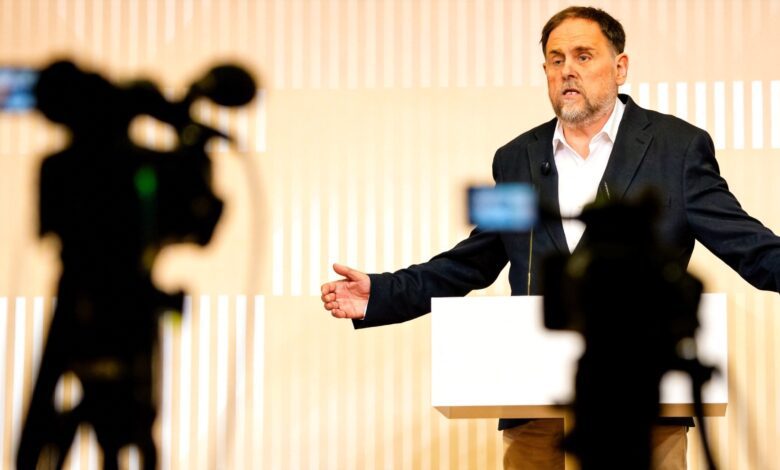
On Tuesday, tensions rose again after public statements by Govern representatives who denied the possibility of withdrawing the budget. Nevertheless, negotiations continued at the Palau de la Generalitat. The turning point was a late-evening visit by Oriol Junqueras to Casa dels Canonges, where—together with Salvador Illa—they agreed on a final version of the roadmap. For the first time in Catalonia’s political history, the executive agreed to withdraw the draft budget, while ERC softened its demands on tax issues.
This move allowed both sides to save face and gain time for further talks. The parties have until July 31 to work out the details and reach an agreed budget. According to El Pais sources, one of the main mistakes was mixing budget issues with tax reform, something they plan to avoid in the future.
Consequences and lessons
The compromise reached not only averted the threat of early elections but also demonstrated that dialogue is possible even amid deep mistrust. Internal party disagreements and public statements complicated the process, yet the political will of the leaders made it possible to break the deadlock. In the coming months, attention will focus on how both sides implement the agreements reached and whether they can ensure stability in Catalonia.
In recent years, Catalan politics has frequently faced crises linked to budgets and disputes over the distribution of powers. For example, in 2023 a similar situation led to prolonged negotiations and the threat of dissolving parliament. At that time, a compromise was reached at the last moment, preventing new elections. Such scenarios are recurring, highlighting the challenge of balancing the interests of different political forces in the region. Each episode affects Catalonia’s economic and social landscape as well as its relationship with the central government.