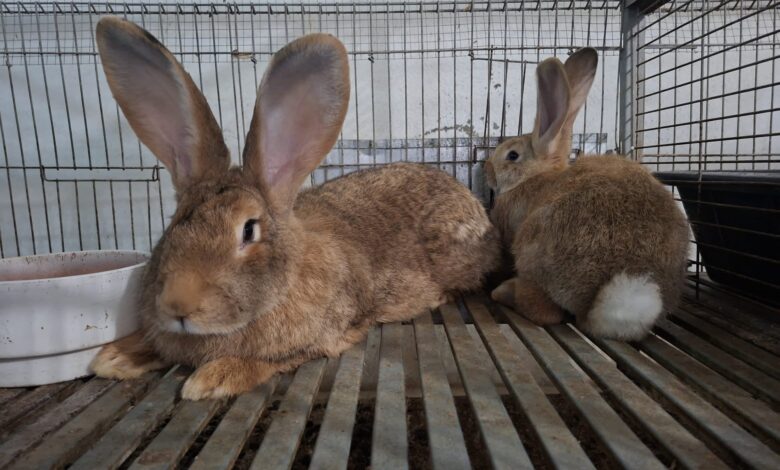
The preservation of rare animal breeds is becoming increasingly important in Spain, where the disappearance of traditional species threatens not only biodiversity but also the country’s cultural heritage. In Toledo, the San Antonio de Padua Monastery has become one of the main strongholds for protecting the giant Spanish rabbit, now on the verge of extinction. This initiative is vital for the future of agriculture and the conservation of unique genetic resources.
Rare breed under threat
According to El Pais, in 2024 there were only 67 purebred female giant rabbits in Spain. Within the monastery walls, 20 females and 16 males are kept, making this site one of the largest repositories of the breed in the country. Sister Consuelo Peset, who grew up in Valencia where these animals have traditionally been raised, initiated large-scale efforts for their preservation. Her experience and knowledge made it possible to establish a stable population, despite challenging circumstances and limited resources.
Since 2026, the monastery has partnered with Complutense University of Madrid to prevent breed degeneration and maintain its purity. The project places special emphasis on pedigree monitoring and exchanging animals among different farms to avoid inbreeding. This approach helps preserve genetic diversity and the resilience of the population.
Traditions and contemporary challenges
The giant Spanish rabbit has been officially recognized by the Ministry of Agriculture as an indigenous and endangered breed. In the past, this species was widespread in households, but since the 1970s it has been displaced by more productive hybrids bred for mass meat production. Nevertheless, according to Sister Peset, the giant rabbit long provided food security for many families due to its high meat content and low bone percentage.
Special conditions are maintained for the animals in the monastery: temperatures between 16 and 23 degrees, with regular cleaning and disinfection. Up to €7,000 per year is spent on feed and medication, with part of the funding coming from donations and local government support. In 2026, the monastery received a grant to purchase new fattening cages, which improved housing conditions.
Challenges and prospects
Sister Peset and her colleagues do not aim for commercial breeding or large-scale meat production. Their main goal is to preserve the breed for future generations and support traditional agricultural practices. Surplus animals are transferred to specialized associations and private farms that are properly registered for breeding. Information about available animals, their chips, and vaccinations is coordinated in a dedicated messenger group.
Currently, the monastery houses 36 adult rabbits and about 40 young ones. If this number is exceeded, some animals are given to other breeders. According to local authorities, preserving the giant rabbit is important not only for genetics, but also for passing down traditions and experience to new generations of farmers.
Context and latest developments
In recent years, there has been growing attention in Spain to conserving rare animal breeds, especially against the backdrop of declining rural populations and the disappearance of traditional farms. Similar projects are underway in Galicia and Castilla y León, where local farmers and scientific institutions are joining forces to protect autochthonous species. In 2025, a national register of rare breeds was established in Valencia, improving coordination between breeders and the government. These initiatives contribute not only to the preservation of biodiversity, but also to the development of sustainable agriculture in Spain’s regions.