A serious accident at a railway crossing in Toledo has reignited concerns about road safety in Spain. The incident took place between the industrial zone and the city of Talavera de la Reina, where an Alvia train traveling on the Madrid–Badajoz route collided with a car. As a result of the tragedy, the car’s driver died, while all 183 passengers on the train escaped unharmed but shaken. The line was completely blocked, leading to schedule disruptions and requiring urgent action from transportation authorities.
The Alvia train, which had departed from Madrid’s Chamartín station, was running on its regular schedule when, just two kilometers from the Talavera de la Reina station, a car appeared on an unguarded crossing. The collision happened at 8:08 p.m. at the 139th kilometer of the Madrid–Cáceres line, between Calera y Chozas and Talavera de la Reina. The car’s driver, who was alone in the vehicle, died at the scene. None of the train’s passengers were injured, but they had to wait for evacuation and the arrangement of an alternative route.
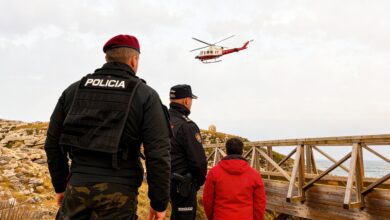
Local police officers, Civil Guard representatives, firefighters, and an intensive care medical team promptly arrived at the scene. The railway company Renfe immediately activated a contingency plan to transport the passengers and ensure the operation of other trains affected in the incident area. The railway administration (Adif) announced a complete suspension of service on the line until all the circumstances are clarified and the aftermath of the accident is resolved.
Impact on passengers
Although the train’s passengers were unharmed, they faced significant inconvenience. They had to wait for evacuation and transfer to alternative transport, which caused delays and disrupted many people’s plans. In such situations, transport companies are forced to react quickly to minimize the impact on customers and restore service as soon as possible.
In recent years, similar incidents at railroad crossings without barriers have become a topic of discussion among experts and the public. Issues of infrastructure modernization and improving safety standards remain relevant, especially amid increasing traffic and a growing number of such incidents.
Reflecting on recent transport difficulties, it’s worth noting that railway problems are not limited to accidents alone. For example, Catalonia recently experienced a transport collapse when buses and trains could not cope with the influx of passengers, as was examined in detail in the article about the consequences of the transport crisis in the region. Such situations highlight how vulnerable Spain’s transport system is to unforeseen events and accidents.
Response of services and future plans
Following the accident in Talavera de la Reina, local authorities and railway operators launched an investigation into the causes. Particular attention is being paid to the condition of the crossing, the absence of barriers, and possible technical malfunctions. Questions about the need to install additional safety measures at similar spots are once again front and center.
Renfe and Adif have repeatedly faced criticism over the state of infrastructure and insufficient safety measures at certain crossings. After each such incident, the possibility of accelerating modernization and introducing new technologies to prevent future tragedies is discussed.
While service on the line remains suspended, passengers are being provided with alternative routes. Authorities promise to restore the normal schedule as soon as possible, though the aftermath of the accident will be discussed for a long time among professionals and local residents.
In recent years, Spain has experienced several high-profile accidents at railway crossings, especially in rural and industrial areas. In 2024, a similar incident occurred in Galicia when a train collided with a truck, which also led to a temporary halt in traffic and sparked discussion about the need to upgrade crossings. In Andalucía in 2025, an accident at an unprotected crossing triggered a wave of protests among local residents demanding immediate security system changes. These cases highlight that the issue remains urgent and requires a comprehensive approach from authorities and transport companies.