Secrets Unveiled: The Start of a High-Profile Trial
In July 2014, Catalonia found itself in the spotlight after Jordi Pujol admitted that his family had kept large sums of money in an Andorran bank for decades, without informing tax authorities. This revelation shocked many in the region and triggered a sweeping investigation that, years later, led to the launch of a court case. On trial are not only the former head of the Generalitat himself, but also his relatives and several entrepreneurs linked to the family.
The court case delves not only into issues of personal enrichment but also casts doubt on an entire era in the region’s history. At its core are the connections between power, business, and family interests that shaped more than twenty years of Pujol’s rule. Prosecutors allege that the family’s fortune is tied to corruption schemes, although so far, there is no direct evidence regarding the origin of the funds.
Family Drama and Disputed Testimonies
Particular attention is focused on the former president’s eldest son, Jordi Pujol Ferrusola, believed to be the main beneficiary of questionable income. He faces the harshest punishment requested—up to 25 years in prison—significantly more than the sentences sought for other family members. The case also involves other individuals whose testimony has provoked mixed reactions.
One of the key episodes was the testimony of Victoria Álvarez, a former companion of Ferrusola. She claimed to have regularly transported cash to Andorra, but it later emerged that she received government funds in exchange for her statements. This called the credibility of her words into question and added a new layer of intrigue to the proceedings.
Political Fallout and Public Reaction
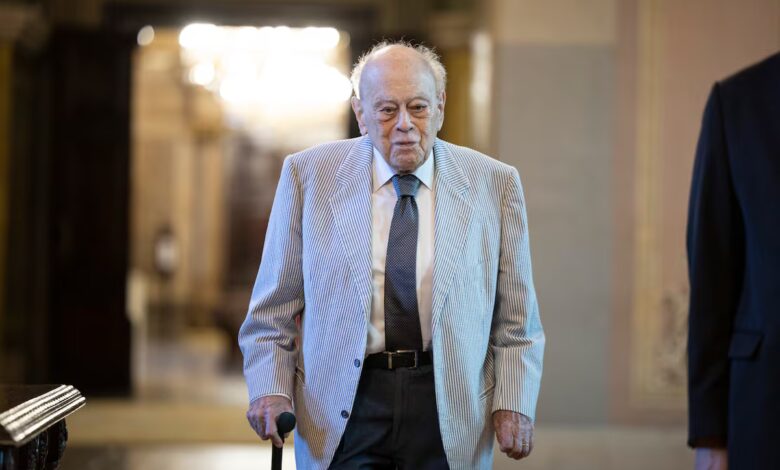
The trial is taking place amid the deteriorating health of Jordi Pujol, now 95 years old. This has sparked discussions about the possibility of releasing him from liability for medical reasons. Nonetheless, debate over his role in Catalonia’s history continues: some believe his contributions to the region should not be overshadowed by the scandal, while others insist on a full investigation.
After his 2014 confession, Pujol found himself isolated, gave up all privileges, and withdrew from public life for a long time. However, in recent years, he has gradually returned to the public eye. In 2021, the former president published a book in which he tried to explain his actions and urged people not to judge his career based on a single incident.
The End of an Era: What’s Next for Catalonia
The trial of Pujol and his family has become a symbol of the end of an era in the region’s history. The question of how his legacy will be judged remains unresolved. Contemporary politicians, including the current head of the Generalitat Salvador Illa, have differing views on whether the proceedings should continue, given the defendant’s age and health.
Nevertheless, for many residents of Catalonia and all of Spain, this trial is not only an attempt to address the past, but also an important lesson for future generations. The court’s verdict will shape how Pujol’s era is portrayed in history books and perceived by society at large.