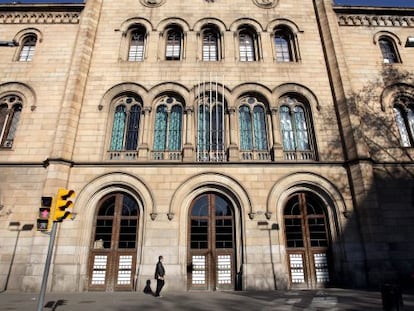
The academic community in Catalonia is once again growing anxious: the region’s largest university faces a situation where the lack of an approved budget for the second consecutive year threatens not only development but also the stability of the entire institution. The leadership of the Universitat de Barcelona openly admits it is forced to operate under constant uncertainty, where every bit of additional funding has to be painstakingly negotiated.
Funding challenges are nothing new for Spanish universities—they have weathered both an economic crisis and a pandemic over the past fifteen years. While it seemed the worst was over, universities now face a new obstacle: an inability to recover resources lost during the crisis years due to frozen budgets. This is felt acutely in Barcelona, where the university has long planned major projects but has been forced to postpone their implementation.
Among the ambitious ideas is the creation of a neuroscience research center on the site of the former theater at the Mundet campus. However, to realize this plan, the university still needs to secure access to European funding. Another major project is the construction of a new facility for the Faculty of Medicine and the Faculty of Health Sciences, set to be located next to the future clinic on Diagonal Avenue. Plans also include the opening of a modern building for mathematicians and computer science specialists. University management expects that, in the future, up to 70% of all activities will be concentrated in this area of the city.
In recent years, the university has faced other challenges as well. Against the backdrop of discussions about inappropriate behavior on campus, the administration notes that the current protocol, introduced three years ago, helps respond effectively to such incidents. University officials are confident that clear guidelines and consistent action help maintain order and protect students and staff.
This year holds special significance for the university: the institution is celebrating its 575th anniversary. This makes it one of the oldest educational establishments in Barcelona. In October, a series of events dedicated to the anniversary will begin, including the official opening of the academic year for the entire regional university system. Among the guests are leaders of top universities from Spain and Europe, who will deliver speeches on the role of science in combating ignorance. The program also includes lectures on the university’s history, scientific conferences, exhibitions, and literary contests. Despite all the challenges, the university is determined to properly mark its anniversary and continue its efforts to advance education in the region.