The question of equality and tradition is once again at the center of attention in Spanish society. The decision to preserve or withdraw the Semana Santa de Sagunto (Holy Week in Sagunto) status as a festival of national tourist interest is directly linked to whether women will be allowed to participate in the famous procession. For many citizens, this is not only a matter of justice but a symbol of change that could impact Spain’s international image.
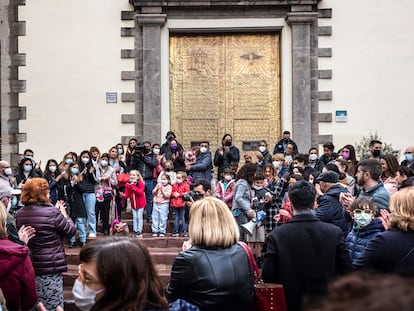
The Ministry of Industry and Tourism has informed the Sagunto municipality that it will not proceed with the process of revoking Semana Santa de Sagunto’s national designation until a vote on women’s participation takes place. The pivotal decision is expected on March 22 at a meeting of the Cofradía de la Puríssima Sang del Nostre Senyor Jesucrist de Sagunt, the brotherhood organizing the processions for over five centuries.
Awaiting change
The municipality, led by Darío Moreno, requested clarification from the ministry regarding the current status of the procedure and reported on the upcoming vote within the brotherhood. In response, the ministry confirmed it would not proceed further until after the meeting’s results. However, representatives of the State Secretariat for Tourism stated that the formal process continues without interruption, and no official guarantees of suspension have been made. The process remains at an early stage, launched after concerns from citizens over discrimination against women.
At present, the relevant department of the ministry is conducting a preliminary assessment to determine whether there are grounds to revoke the honorary status of Semana Santa de Sagunto due to the lack of female participation. The analysis is being carried out in accordance with current regulations, with special attention given to the criteria of inclusion for all citizens and adherence to the principles of equality.
Legal arguments and precedents
According to the municipality, the initiative to review the festival’s status arose after an appeal from equality advocates within the brotherhood itself. This marked the start of a legal review aimed at determining whether the requirements for recognizing Semana Santa de Sagunto as a national heritage are being violated. As part of its argument, the ministry cites a recent Constitutional Court ruling in a similar case in Tenerife, where the court found a woman’s rights had been violated when she was excluded from a religious brotherhood, and ordered equal access for all.
Legal experts are confident that if a court case arises regarding women’s participation in Semana Santa de Sagunto, the decision will be similar: the court will uphold women’s right to participate. The ministry emphasizes that it is ready to await the results of the vote and, depending on the outcome, either continue the revocation process or terminate it.
A historic moment for the brotherhood
Four years ago, a similar vote within the brotherhood, which has about 1,700 members, ended with a refusal to amend the charter: most voted against replacing the word “man” with “person.” Now, the Semana Santa Inclusiva public movement is hoping for change, pointing to other cities as examples, where women already take part in such processions—in Sevilla, Málaga, and Lorca.
To earn the status of a festival of national tourist interest, criteria such as historical significance, continuity of tradition, community involvement, and originality of events are taken into account. This status not only brings prestige but also obliges organizers to actively promote the festival at the national level.
In recent years, debates in Spain over traditional festivals and their alignment with modern equality standards have become more frequent. In 2024, a similar controversy erupted in Andalucía, where several brotherhoods were forced to revise their statutes after public pressure. Heated debates over the role of women in religious processions also took place in Murcia and Castilla y León. These events show that the issue of equality in traditional Spanish festivals is becoming increasingly relevant and can affect the status and perception of national cultural symbols.