The court decision in Valencia, regarding the refusal to summon Pedro Sánchez in the case on the aftermath of the DANA, has become a significant event across Spain. This move highlights how difficult it is to hold top officials accountable, even in high-profile cases related to emergencies. For many citizens, such decisions raise questions about the transparency and effectiveness of the judicial system, as well as how government agencies respond to crises.
Details of the court ruling
A panel of six judges in Valencia unanimously upheld the decision of the judge from Catarroja, who is leading the investigation into the actions of the authorities during the DANA. The appeal filed by the organization Hazte Oír was fully dismissed. According to El confidencial, the judges found no substantial grounds to summon Pedro Sánchez as a witness, concluding that such a measure would be mostly preliminary and of little value. The decision notes that the arguments presented did not convince the court of the need to hear from the head of government.
This decision sparked a lively debate among the public and experts. Many expected that Pedro Sánchez’s participation in the process could shed light on the management of the crisis and provide answers regarding the actions of central authorities. However, the court determined that such questioning would not offer significant benefits for the investigation. According to several analysts, this stance could set a precedent for future cases involving senior officials’ actions during emergencies.
Reaction and consequences
The court’s decision has already triggered a wave of commentary in Spanish media and on social networks. Some experts believe that the refusal to hear Pedro Sánchez may be seen as a sign that top officials are beyond the reach of the judiciary. Others note that such decisions could erode trust in the legal system and fuel public dissatisfaction. At the same time, some legal professionals support the court’s position, arguing that summoning the head of government should be based on concrete facts rather than solely on public interest.
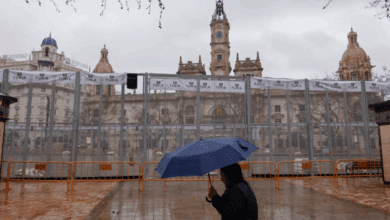
In light of recent developments in Valencia, including public protests and disputes over local government decisions, attention to court proceedings is mounting. For instance, a recent controversy erupted in the region over the overlap between a women’s demonstration and a city fireworks show, which also provoked strong public reactions and was discussed in the article about controversial decisions by the Valencia city hall. Such situations highlight how acutely society perceives issues of accountability and government transparency.
Context and similar cases
As reported by El confidencial, the court’s decision in Valencia may become an important precedent for other regions of Spain, where investigations into government actions during natural disasters are also underway. In recent years, the country has repeatedly debated who should be held responsible for the consequences of natural catastrophes and how effective the control mechanisms are. For example, in Murcia, following a flood, local residents called for government officials to be held accountable, but the court also refused to summon several high-ranking officials.
Overall, the practice of refusing to summon top state officials to testify in emergency-related cases is becoming increasingly common. This trend triggers mixed reactions in society and raises questions about the need to reform the judicial system. As Spain faces new challenges related to climate change and a rise in extreme weather events, the issue of government responsibility in crisis situations remains one of the most widely discussed.
In recent years, Spain has faced several high-profile court cases related to the actions of authorities during natural disasters. For example, after severe floods in Catalonia and Andalusia, local residents and civic organizations repeatedly sought to hold officials responsible for coordinating rescue efforts to account. However, courts often refused to summon high-ranking officials, citing insufficient evidence or a lack of direct connection between their actions and the consequences of the disasters. Such rulings have sparked debate and highlighted the complex balance between public interest and legal procedure.