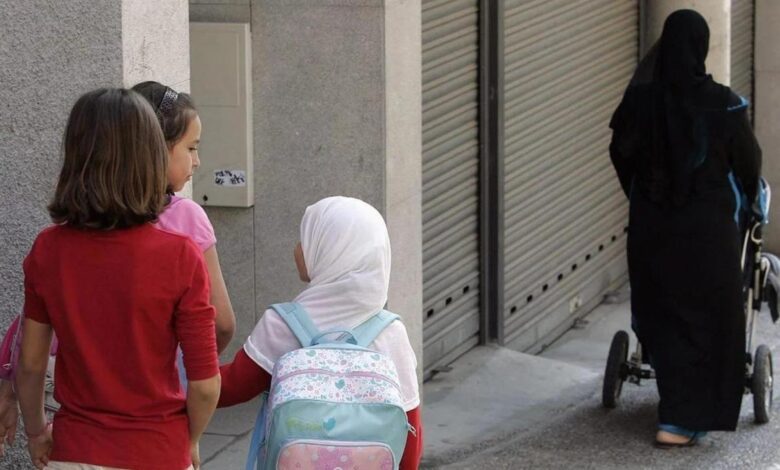
The sharp increase in the number of foreign students in Spanish schools over the past decade has become one of the most notable demographic shifts in the country. This change affects the education system, resource allocation, and the integration of new residents. Importantly, the largest growth is seen not in traditional migration centers, but in regions that previously had a low proportion of newcomers.
Unexpected leaders
From 2013 to 2024, the number of students with foreign citizenship in Galicia has nearly doubled. Ten years ago, just over 14,000 foreign children attended schools in the region, but by 2024, that number exceeded 26,000. This surge not only surprised local authorities but also prompted a review of educational programs and support for integration.
A similar situation has developed in the Comunidad Valenciana. Here, over the same period, the number of foreign students rose from 90,000 to almost 167,000, an increase of about 84%. These regions are now forced to seek new solutions to adapt the educational environment to the rapidly changing student body.
Northern regions and islands in transition
Northern areas of Spain are also experiencing significant growth. In Navarra, the number of foreign students increased by almost 70%, and in País Vasco by 67%. In Asturias, after a slight decline in the middle of the decade, the number of foreign schoolchildren exceeded 9,800 by 2024, which is 60% more than in 2013.
The Canary Islands (Canarias) have become another example of rapid growth. Over the past ten years, the number of foreign students here has jumped from 26,800 to 43,900, an increase of around 63%. This region remains one of the main entry points for migrants to Spain, which is directly reflected in school statistics.
Traditional centers and new trends
In Andalucía and Murcia, long considered popular destinations for migrants, the number of foreign students has also grown, though not as rapidly. In Andalucía, their numbers increased by 55% over the decade, and in Murcia by 38%. These regions continue to play a key role in migration flows, but are now outpaced by new leaders in terms of growth rate.
Madrid and Cataluña still lead in the absolute number of foreign students. The capital region saw an increase of 37%, while Cataluña’s numbers rose by 39%. However, these growth rates lag behind those in Galicia or Valencia. This indicates that migration is becoming more evenly distributed across the country.
A shift in the migration map
A broad analysis of the data shows that Spain is experiencing a new wave of territorial redistribution of migrants. Now, not only major cities and traditional regions, but also less populated areas are facing the need to integrate new students. This requires local authorities to adopt flexible and innovative approaches to educational policy.
The impact of migration on schools is becoming evident not only in statistics, but also in daily life. Teachers and administrators face new challenges related to language barriers, cultural differences, and the need for additional support to help children adapt. According to RUSSPAIN.COM, similar developments have already led to a revision of educational strategies in several regions.
Looking back at recent events, it is notable that mass population movements and their impact on infrastructure have repeatedly become subjects of public debate. For example, in 2026, large-scale floods in Andalucía and Extremadura forced authorities to reconsider their emergency response strategies. More details on how natural disasters affected these regions can be found in the article about mass evacuation and alarm in Andalucía and Extremadura.
In recent years, Spain has faced new challenges related to changes in population structure. The growing number of foreign students in schools is just one example of how migration influences daily life. Similar trends have been observed in other European countries, where educational systems are also adapting to new realities. It is important to monitor how regions are coping with these changes to respond promptly to emerging needs.