Alicante is much more than just a sun-drenched city on the Mediterranean coast, famous for its beaches and excellent climate. Its streets are steeped in a fascinating history, marked by the footprints of great civilizations that have left a lasting legacy here. If you’ve ever wondered where Alicante got its name, the answer is a captivating journey through the centuries, from the ancient Greeks to the Romans and the Arabs.
The city’s history dates back to the Bronze Age, but its earliest written records tie its founding to the Greeks. Later, the Romans reinforced its significance, turning it into a major trading hub thanks to its strategic location. In the Middle Ages, the city fell under Muslim rule, who developed agriculture and strengthened the port. Christian forces from the Kingdom of Castile reclaimed it in the 13th century, after which Alicante became part of the Crown of Aragon and its economic and political influence began to grow.
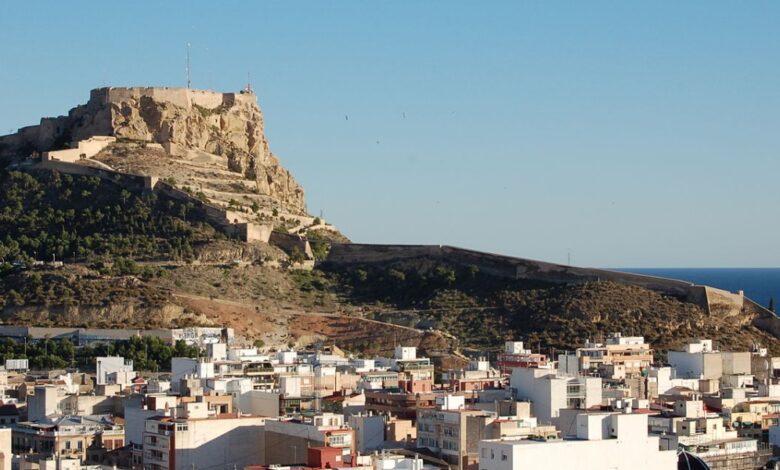
The origin of the city’s name is intertwined with both historical facts and captivating legends. The most widely accepted version traces it back to the Greeks, who founded a settlement called Akra Leuké, meaning “white cape”—a clear reference to the mountain where the Santa Bárbara castle now stands. The Romans, who succeeded them, Latinized the name to Lucentum, echoing the word “light” and alluding to the city’s bright, elevated location. With the arrival of the Muslims in the 8th century, the toponym evolved again, this time into Al-Laqant. Interestingly, in Arabic the name still retained its connection to light. After the Christian Reconquista, the name was adapted to local phonetics: first as Alacant in Valencian, and then as Alicante in Castilian. Today, both forms are official.
However, there is another, more romantic version explaining the city’s name—a popular legend about Ali and Cantara. The story goes that a powerful caliph had a beautiful daughter named Cantara, whose hand was sought by two worthy suitors: the noble Ali and the general Almanzor. To decide who would marry the princess, the caliph set them a difficult task. Almanzor set out to distant lands in search of untold riches, while Ali decided to stay and build an aqueduct to bring precious water to the city. Spending time with Cantara, he gradually won her heart.
When Almanzor returned victorious and bearing rich gifts, the caliph, true to his word, gave him his daughter’s hand in marriage. Upon hearing this, Ali fell into despair and threw himself from a cliff. Cantara, unable to bear the loss of her beloved, also took her own life. Grief-stricken, the caliph could find no solace. The townspeople, moved by this tragic tale, decided to honor the memory of the lovers by combining their names in the name of their city — Alicante.
Thus, the city’s modern name is a unique blend of real history and popular legend. It reflects the journey this land has taken through eras and cultures, from the Greeks’ “White Cape” and the Romans’ “City of Light” to the immortal love story that proved stronger than death.