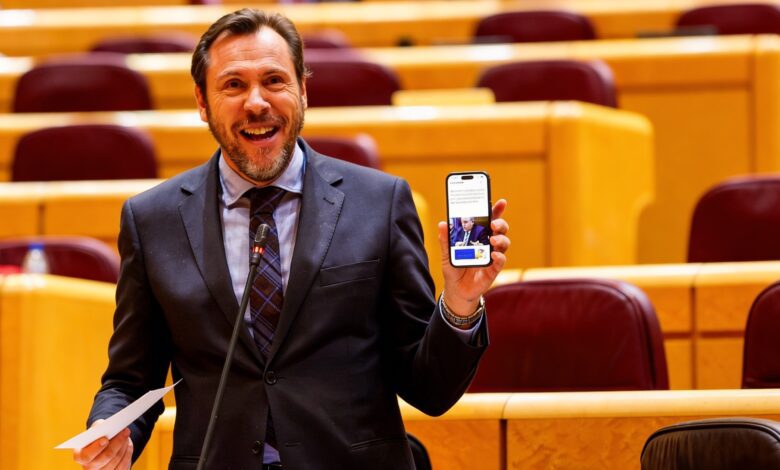
Spain is discussing an unusual approach to public communication: Transport Minister Óscar Puente personally manages his account on X (formerly Twitter) and actively engages with followers. His actions are drawing attention, as this is a direct communication between a government official and citizens—something rarely seen at this level. According to El Pais, Puente not only responds to messages but also makes independent decisions to block users if he deems their behavior unacceptable. This shapes the public perception of the ministry and sets new standards of transparency in Spanish politics.
Óscar Puente started using X back in 2010, when he was a municipal deputy in Valladolid. At the time, he was looking for a way to communicate his views to local residents, bypassing traditional channels. Over fifteen years, his audience grew to 300,000 followers, and the minister became one of Spain’s most prominent politicians on social media. According to Puente, X has enabled him to quickly respond to complaints from city residents, such as municipal service issues. This approach helped address everyday problems efficiently, strengthening his reputation among the people of Valladolid.
Personal oversight and communication style
After becoming Minister of Transport in 2023, Puente did not change his habits. He continued to run his social media accounts personally, emphasizing that he does not entrust this task to aides. The minister believes it is important for citizens to see a real person behind the messages, not an impersonal press release. This style of communication sometimes leads to emotional responses: Puente admits he can respond sharply or block a user if faced with insults or aggression. He does not hide the fact that he blocks many users, explaining this as a desire to maintain constructive dialogue and avoid pointless arguments.
The minister’s activity on X stands out compared to other government members. He regularly comments on current events, debates with opponents, and does not shy away from controversial topics. For example, in May 2025, he criticized former Valencia president Carlos Mazón for actions during a natural disaster, and also argued with opposition leader Alberto Núñez Feijóo. Last year, Puente publicly condemned Castilla y León president Alfonso Fernández Mañueco for being absent during the wildfires, which generated widespread public reaction.
Response to crises and influence on society
During the railway accident in Adamuz (Córdoba), the minister assumed the role of chief informant on X, with his posts gaining millions of views. He doesn’t hesitate to criticize the media when he believes their coverage is biased, as was the case with a Málaga outlet reporting on rail disruptions during Semana Santa. This approach sets a new standard for public communication, where an official not only shares information but also actively defends his position in the digital space.
Puente explains his activity as a necessity to counter the one-sided influence of social media algorithms, which he believes lean to the right. He argues that leaving X would mean giving up the fight for his own point of view and surrendering to his opponents. The minister is convinced that only personal presence and openness allow for influencing public opinion and driving change. This approach is controversial, but it also draws attention to issues of transparency and accountability in government.
Trends in political communication
Spanish politicians are increasingly using social media for direct dialogue with citizens, but few are ready for open and emotional engagement. The example of Óscar Puente shows that personal participation in digital debates can be an effective way to build trust and increase transparency. According to russpain.com, such practices are gradually becoming the norm among public officials, especially amid growing competition for people’s attention.
In recent years, Spain has seen an increase in public conflicts between officials and social media users. For instance, the debate over the status of the police and Guardia as a profession sparked heated discussions, as detailed in the article about the challenges of recognizing police work as a hazardous profession. Such cases highlight that the digital environment is becoming an integral part of the country’s political life and requires new approaches to communication.
Overall, the experience of the Transport Minister reflects a trend toward the personalization of power and a growing role for social networks in shaping public opinion. In the coming years, digital platforms are expected to play an increasingly significant role for politicians, as well as to introduce new formats for interaction between the state and society.